


Tax Season and Financial Mis-Selling: What You Need to Know
Every year, as the financial year draws to a close, there’s one ritual most taxpaye...
 Discover your MoneySign®
Identify the personality traits and behavioural patterns that shape your financial choices.


Income tax laws have distinct rules for the taxation of equity shares and mutual funds. To promote investment in capital markets and support financial inclusion, taxation is subsidised under Section 111A and Section 112A of the Income Tax Act, which govern short-term and long-term capital gains, respectively.
In this blog, we will explore the key tax treatments under these sections and explain how holding periods impact tax rates on equity shares and mutual funds. We will also discuss the available exemptions and deductions that investors can leverage to optimise their tax liabilities and plan strategically for better financial outcomes.
Section 111A applies to short-term capital gains, while Section 112A applies to long-term capital gains. If the holding period is less than 12 months, the gains are classified as short-term; otherwise, they are considered long-term.
These sections cover gains from the sale of capital assets such as listed equity shares, units of equity-oriented mutual funds, and units of a business trust, provided that Securities Transaction Tax (STT) is paid and the transaction is executed on a recognized stock exchange.
However, the rule mandating the payment of Securities Transaction Tax (STT) is waived for transactions conducted on recognized stock exchanges within International Financial Services Centres (IFSCs), provided the transactions are carried out in foreign currency.
Tax rates for Short term capital gains are:
Tax rates for Long-term capital gains are:
However, there is an exemption on long-term capital gains up to ₹1,25,000, which was increased from ₹1,00,000 effective from July 23, 2024.
Deductions under Chapter VI-A (Section 80C, 80G, etc.) are allowable from the gross total income after reducing short term and long term capital gains. This means:
Priya invests in both equity shares and mutual funds. She buys equity shares of Company XYZ and units of Mutual Fund ABC of ₹8,00,000. After holding these investments for varying periods, she decides to sell some of her holdings. Priya’s other incomes are ₹1,85,000.
This scenario demonstrates how Sections 111A and 112A aim to promote investment in the capital markets by offering subsidised taxation on gains from equity shares and mutual funds. The clear distinction between short-term and long-term holdings encourages both active trading and long-term investment, with tax benefits tailored to each approach.
Understanding Short-Term Capital Gains (STCG), Long-Term Capital Gains (LTCG), tax rates, and various exemption limits is crucial for accurately reporting capital gains in your ITR. By knowing how to categorise your assets, calculate gains or losses, and take advantage of available exemptions, you can reduce your tax burden.
Staying informed about current tax rules will empower you to make better financial decisions. A qualified financial advisor can assist in correctly reporting your capital gains. To optimise your taxes, download the 1 Finance app and book a consultation with a qualified financial advisor for a seamless, hassle-free tax planning experience.

The views in the article /blog are personal and that of the author. The idea is to create awareness and not intended to provide any product recommendations.


Identify the personality traits and behavioural patterns that shape your financial choices.
Every year, as the financial year draws to a close, there’s one ritual most taxpaye...
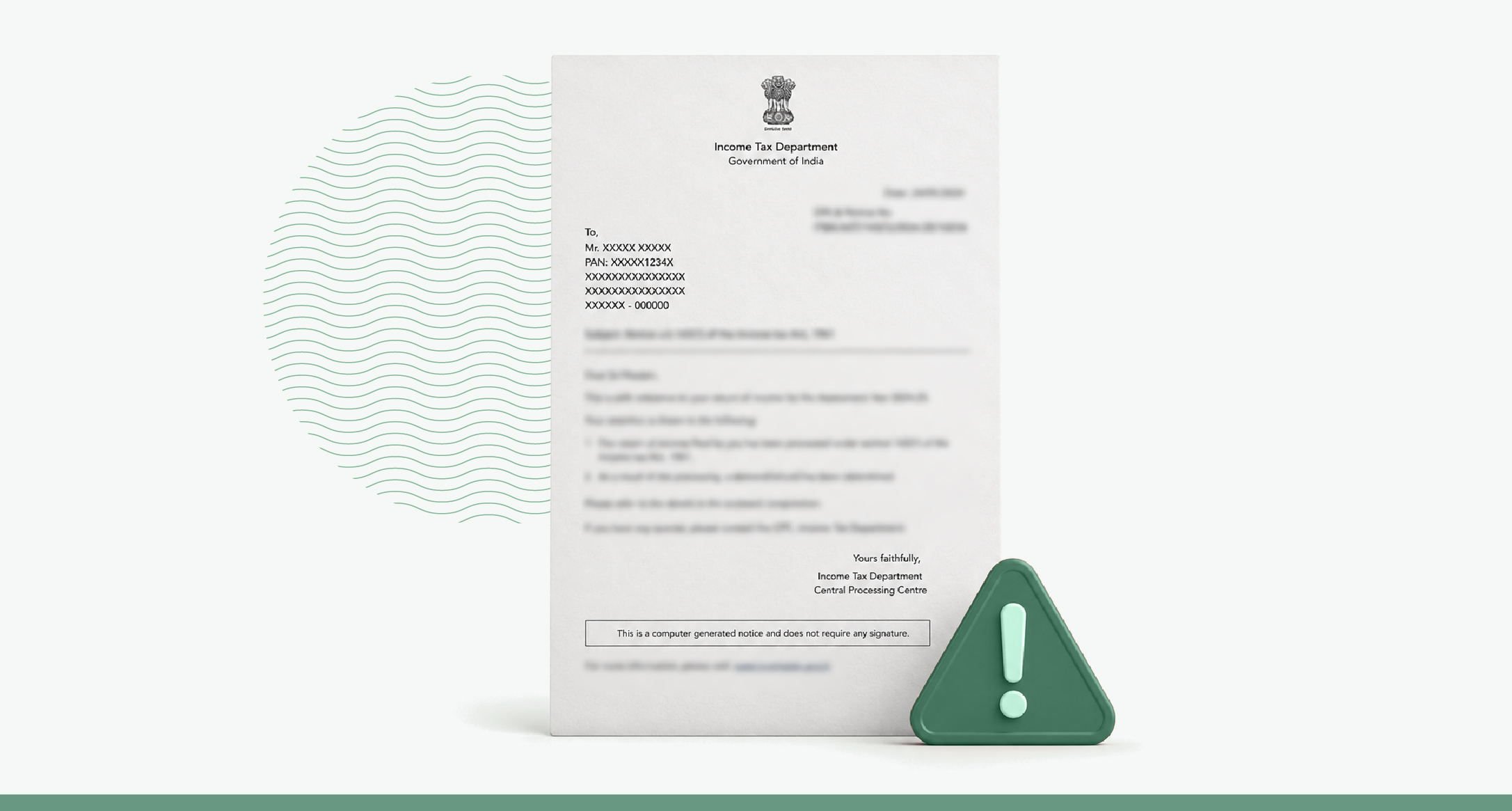
Key takeaways Few emails unsettle a salaried taxpayer quite like an income tax notice...
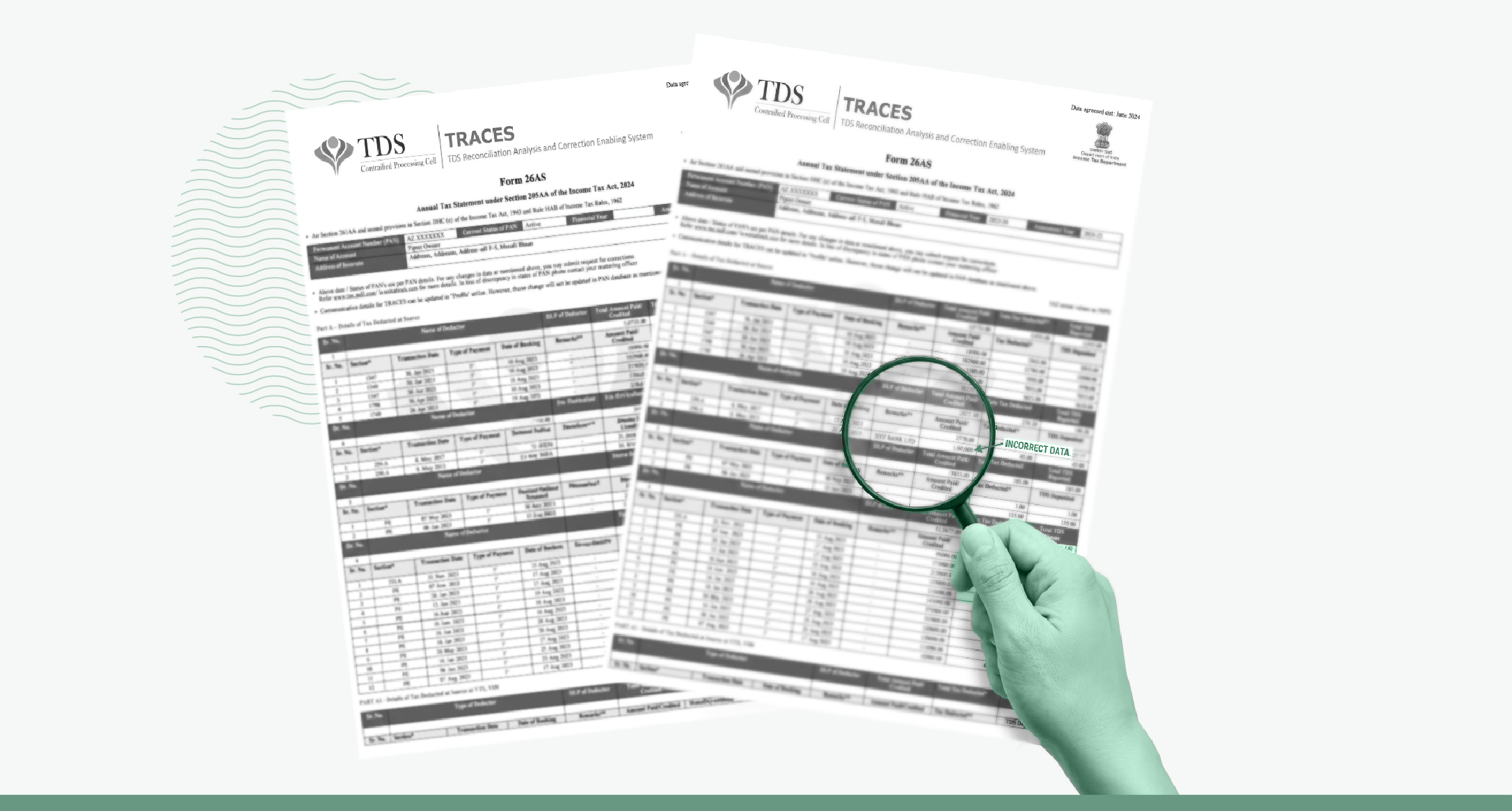
Key takeaways One reason your ITR refund stalls could be a TDS credit mismatch. It ar...