



Looking to invest in high growth property? Here are four key factors t...
You may have noticed how property prices suddenly rise in certain areas after a new m...

As of December 31, 2024, the Indian mutual fund industry’s Assets Under Management (AUM) reached ₹66.93 lakh crore, marking a significant growth from ₹26.54 lakh crore on December 31, 2019. Source : Amfi
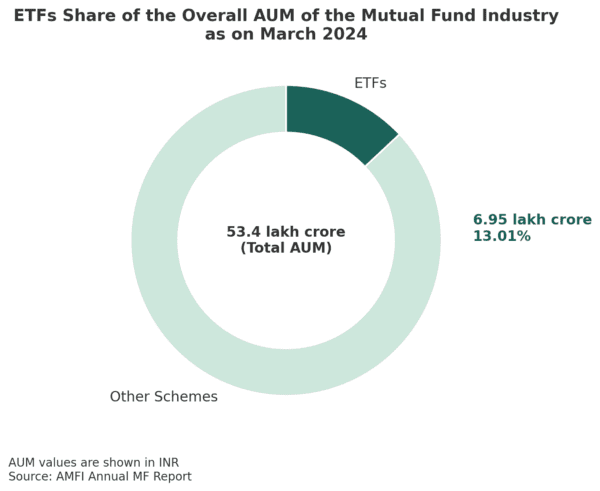
On an annual report released by AMFI on march 2024, said that ETFs constitute close to 13% of the overall mutual fund industry AUM. [1] ETFs occupy a share of ₹6.95 lakh crore out of ₹53.40 lakh crore of the total AUM of the mutual fund industry.
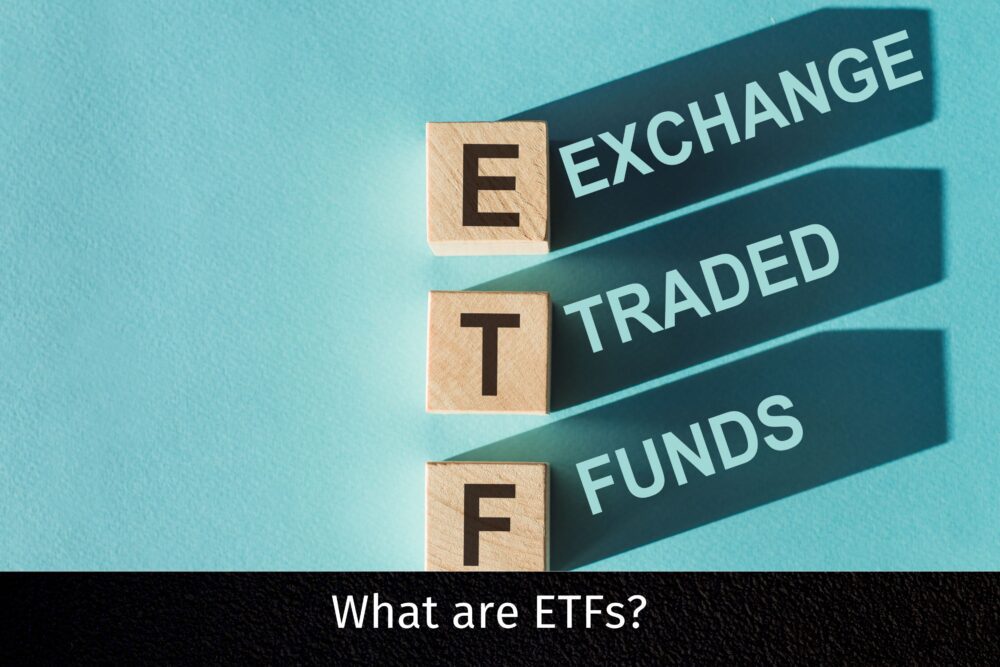
Exchange-Traded Funds (ETFs) have gained immense popularity among investors due to their cost-effectiveness, flexibility, and ability to track a variety of asset classes. Whether you’re a beginner or a seasoned investor, understanding ETFs can help you diversify your portfolio efficiently while keeping costs low.
In this comprehensive guide, we will cover:
An Exchange-Traded Fund (ETF) is a type of investment fund that holds a collection of securities, such as stocks, bonds, commodities, or a mix of these assets. ETFs are designed to track the performance of a specific index, sector, or investment strategy. They trade on stock exchanges just like individual stocks, allowing investors to buy and sell them throughout the trading day at market prices.
ETFs come in different varieties based on their underlying assets and investment strategies. Here are some of the most common types:
1. Equity ETFs
These ETFs track stock indices such as the Nifty 50, Sensex, S&P 500, NASDAQ-100, etc. They allow investors to gain exposure to a diversified basket of stocks.
2. Bond ETFs (Fixed Income ETFs)
Bond ETFs invest in government bonds, corporate bonds, or municipal bonds, providing a steady income stream with relatively lower risk compared to equity ETFs.
3. Commodity ETFs
These ETFs invest in commodities such as gold, silver, oil, or agricultural products. They allow investors to gain exposure to commodities without having to store or trade the physical asset.
4. Sector & Industry ETFs
Sector ETFs focus on specific industries like technology, healthcare, banking, or real estate, allowing investors to target growth sectors.
5. International ETFs
These ETFs provide exposure to international markets, enabling investors to diversify beyond domestic markets.
6. Thematic ETFs
Thematic ETFs follow a specific investment theme, such as ESG (Environmental, Social, and Governance), Artificial Intelligence, or Smart Cities.
7. Inverse & Leveraged ETFs
1. Diversification
ETFs hold multiple assets, reducing the risk of investing in a single stock or bond.
2. Cost-Effective
Most ETFs have lower expense ratios compared to actively managed mutual funds.
3. Liquidity & Flexibility
ETFs can be traded throughout the day like stocks, unlike mutual funds, which are bought and sold at the day’s closing price.
4. Transparency
ETF holdings are disclosed daily, unlike mutual funds, which disclose holdings monthly or quarterly.
5. Tax Efficiency
ETFs generally have lower capital gains taxes compared to actively managed mutual funds.
6. Lower Investment Minimums
Unlike mutual funds that may require a minimum investment, ETFs allow investors to start with a small capital, even buying just one unit.
1. Market Risk
ETFs are exposed to market fluctuations. If the underlying index or sector declines, ETF prices will also fall.
2. Tracking Error
Sometimes, ETFs do not perfectly track their benchmark index due to management fees or illiquid assets.
3. Liquidity Risk
Some niche or thematic ETFs have low trading volumes, which may result in higher bid-ask spreads and difficulty in buying or selling at fair prices.
4. Currency Risk (for International ETFs)
ETFs that track foreign indices are affected by currency exchange rate fluctuations.
5. Expense Ratios
Though lower than mutual funds, ETFs still charge management fees, which can eat into returns.
Step 1: Choose a Brokerage Account
Since ETFs are traded on stock exchanges, you need a Demat and trading account with a brokerage firm.
Step 2: Select the Right ETF
Consider factors such as:
Step 3: Place Your Order
ETFs can be bought and sold like stocks. You can place:
Step 4: Monitor and Rebalance
Regularly track ETF performance and rebalance your portfolio if needed.
| Feature | ETFs | Mutual Funds |
|---|---|---|
| Trading | Traded like stocks on exchanges | Bought/sold at NAV price at the end of the day |
| Cost | Lower expense ratios | Higher expense ratios |
| Minimum Investment | No minimum required | May have a minimum investment requirement |
| Liquidity | Can be traded anytime during market hours | Only redeemable at NAV end-of-day |
| Transparency | Holdings disclosed daily | Holdings disclosed monthly/quarterly |
| Tax Efficiency | More tax-efficient due to fewer capital gains distributions | Less tax-efficient |
1. ETFs Are Risk-Free
While ETFs offer diversification, they are still subject to market fluctuations.
2. All ETFs Are Passively Managed
Some ETFs are actively managed, meaning fund managers make decisions to outperform the market.
3. ETFs Always Have Lower Costs Than Mutual Funds
While ETFs generally have lower costs, some specialized or actively managed ETFs may have high expense ratios.
4. ETFs Are Only for Experienced Investors
ETFs are suitable for beginners as well, especially those tracking broad market indices like the Nifty 50 or S&P 500.
ETFs are a powerful investment tool that offers flexibility, diversification, and cost efficiency. Whether you are looking to invest in stocks, bonds, commodities, or global markets, ETFs provide an easy and affordable way to access different asset classes.
For investors who want a long-term, low-cost, and diversified approach to investing, ETFs can be an excellent addition to their portfolio. However, understanding the risks, expense ratios, and tracking errors is essential before making an investment decision.
By carefully selecting the right ETFs and aligning them with your financial goals, you can build a robust and diversified portfolio for the future.

The views in the article /blog are personal and that of the author. The idea is to create awareness and not intended to provide any product recommendations.


You may have noticed how property prices suddenly rise in certain areas after a new m...
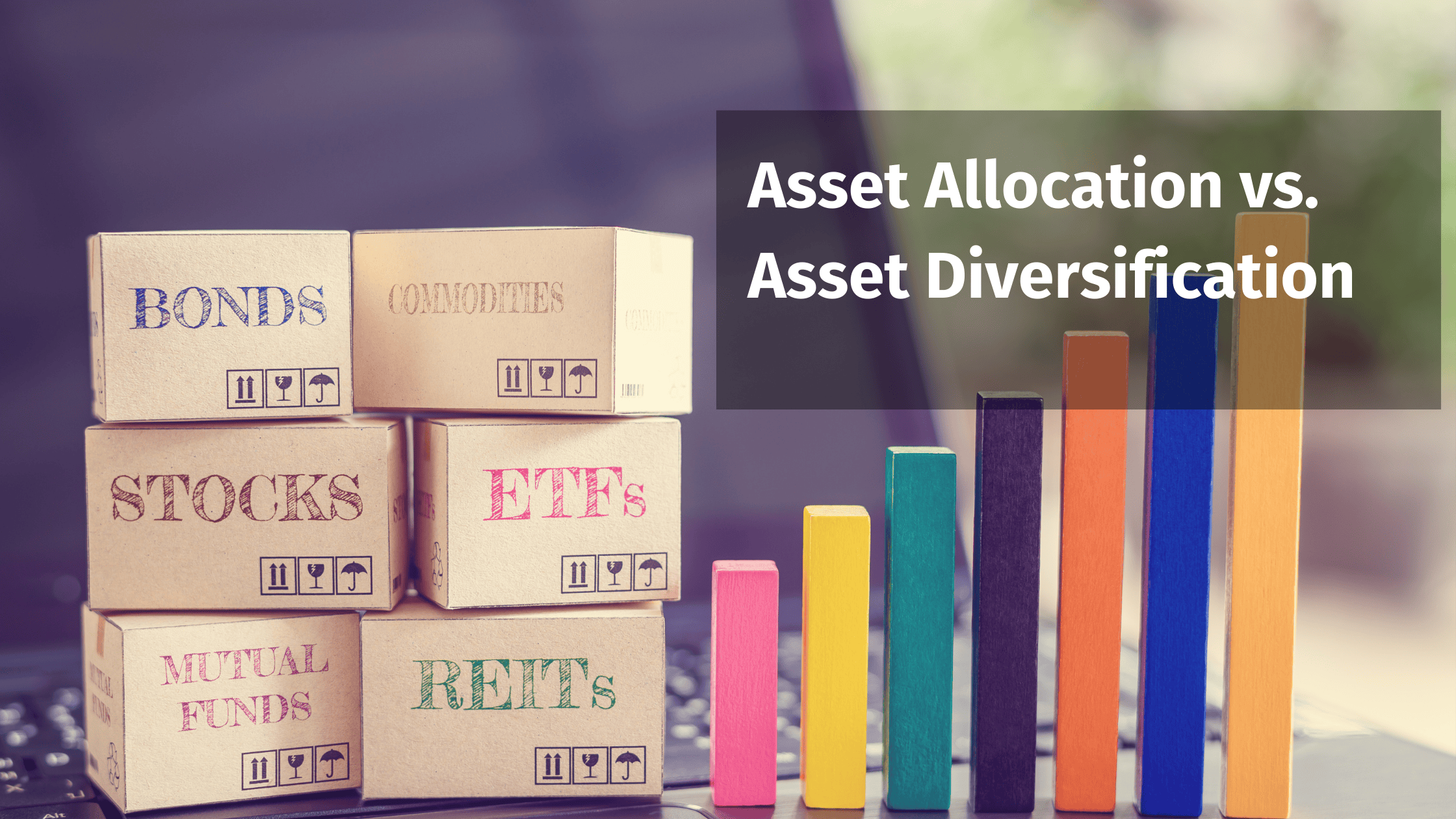
If you’ve ever explored the world of investing, you’ve likely encountered the ter...
Index funds are investment vehicles designed to track the performance of a specific m...