
ITR-1 (Sahaj) AY 2026-27: Who can file, eligibility criteria, new 2-house property rule, capital gains limit & online filing guide
By Arman Qureshi
ITR Filing
Jun 18, 2026
Plan Your Retirement with Our Qualified Financial Advisors

Your first financial plan is free
While most people around you might have successfully filed their Income Tax Returns for the Financial Year 2023-24 by 31st July, you’ve probably missed the deadline or submitted ITR with some misinformation on the portal. Whatever the case may be, you still have a chance of filing your ITR successfully.
Going through the Income Tax Act, 1961, there are two provisions, namely Belated ITR under Section 139(4) and Revised ITR under Section 139(5). These two different types of filing can be used to either submit a late filing or modify an incorrect filing.
In the event that you have missed filing your ITR within the time limit prescribed by the Income Tax Department, which is usually July 31st of the assessment year, you may file a belated ITR.
A belated ITR usually comes with certain ineligibilities for deductions and exemptions, levied with an additional late fee as a penalty under Section 234F.
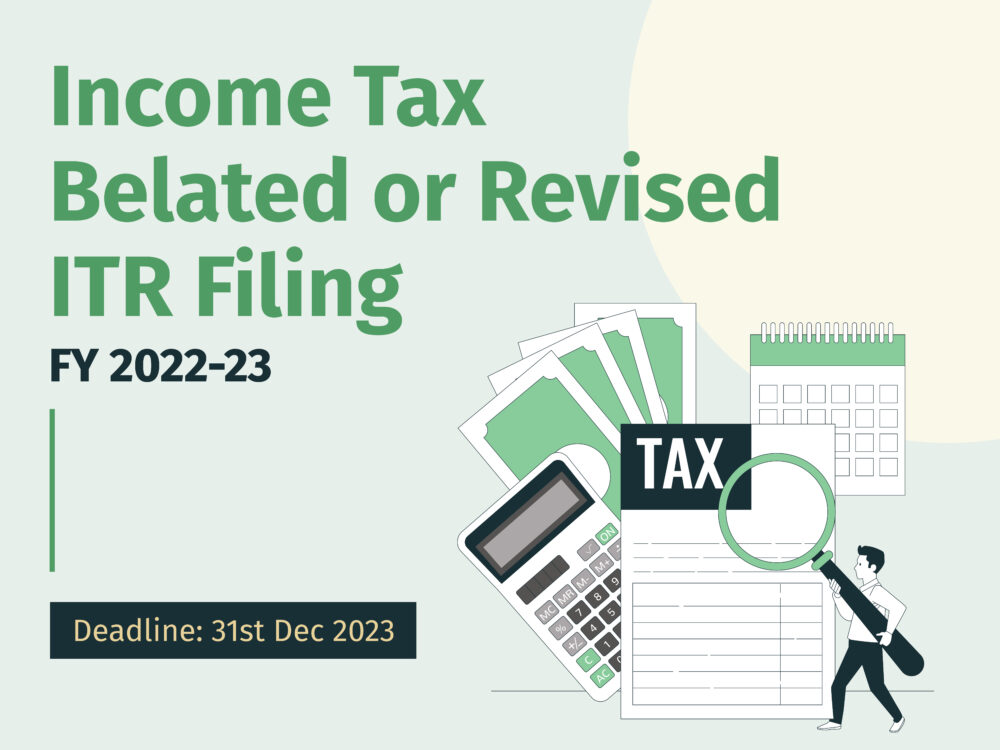
The deadline for filing a belated ITR is December 31st of the assessment year or completion of assessment, whichever is earlier. So, for example, the deadline for filing a belated ITR for FY 2023-24 is December 31st, 2024.
Now, it might happen that when you are filing your ITR within the stipulated date, you might make a mistake while entering or pre-validating the details. This is why there is a provision to file a revised ITR request under Section 139(5) of the Income Tax Act, 1961. You can file a revised ITR for both – a timely filed ITR and a belated ITR.
The deadline for filing a revised ITR is the same as the belated ITR. If you notice any errors in your originally filed or belated returns, then you have time until December 31st of the relevant assessment year to file a revised return.
Understanding the distinction between these two types of returns is crucial. Below is a comparison to help you understand the key differences:
| Parameters | Belated ITR | Revised ITR |
| Consequences | Belated ITRs may attract several disadvantages including but not limited to late fees, and ineligibility to carry forward business or capital losses. | A revised ITR does not attract any adverse consequences if filed within the stipulated time period of December 31st. |
| Associated Penalties | Under Section 234F, belated ITRs can be filed only with a late fee up to INR 5,000. | There are no penalties, in case of revised ITR filings. |
Now that you know which ITR filing suits your situation better, head over to the Income Tax Department’s portal and sign yourself up in minutes to avoid any legal consequences or financial penalties.
In case you haven’t pulled up your socks yet, missing the deadline for both belated and revised ITRs can lead to adverse consequences, including losing the chance to make corrections or file a belated return. If you need help filing your belated or revised ITR, 1 Finance can guide you every step of the way for a smooth, penalty-free experience.

The views in the article /blog are personal and that of the author. The idea is to create awareness and not intended to provide any product recommendations.


Plan Your Retirement with Our Qualified Financial Advisors
Your first financial plan is free