

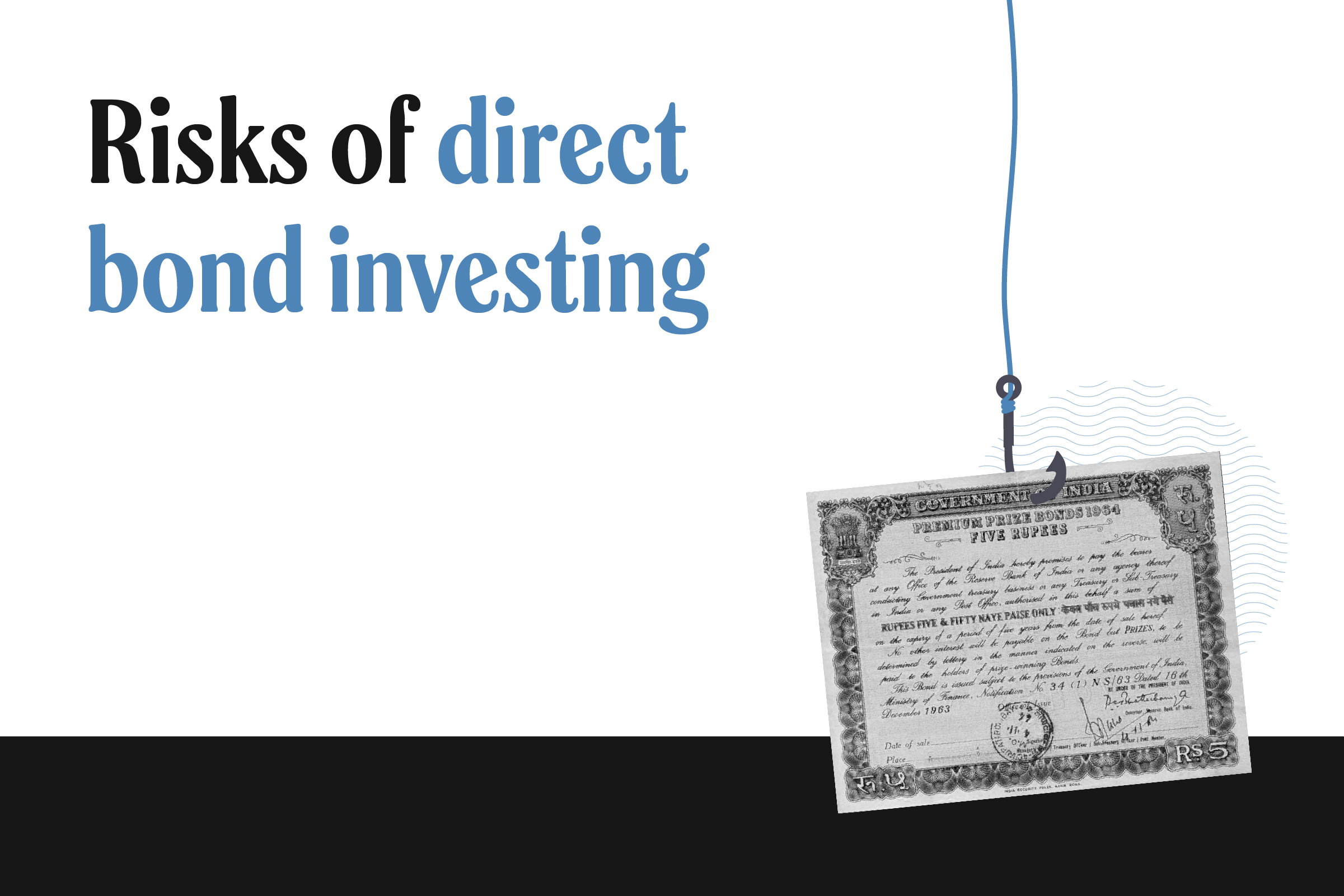
The ‘safe’ illusion: Hidden risks of directly investing in...
Uncover bond risks and learn smarter ways to grow your investments safely.
 Discover your MoneySign®
Identify the personality traits and behavioural patterns that shape your financial choices.


In 2017, the Securities and Exchange Board of India (SEBI) introduced new guidelines to categorise and streamline mutual fund schemes. The goal was to simplify the investment landscape, making it easier for investors to compare funds and make informed choices. By defining clear categories, SEBI has ensured that investors can select mutual funds that align with their financial goals, risk appetite, and investment horizon.
The primary reasons for SEBI’s move were:
SEBI classified mutual funds into five broad categories:
Each category is further divided into sub-categories based on investment objectives and strategies.
These funds primarily invest in stocks and are meant for investors looking for long-term capital growth.
| Fund Type | Minimum Equity Investment | Key Feature |
|---|---|---|
| Multi Cap Fund | 75% | Invests across large, mid, and small-cap stocks |
| Flexi Cap Fund | 65% | No fixed allocation to any market cap, offering flexibility |
| Large Cap Fund | 80% | Focuses on the top 100 companies by market cap |
| Large & Mid Cap Fund | 35% in large-cap, 35% in mid-cap | Balances stability and growth potential |
| Mid Cap Fund | 65% | Invests in mid-sized companies (101st-250th in market cap) |
| Small Cap Fund | 65% | Invests in small-sized companies (beyond 250th in market cap) |
| Sectoral/Thematic Fund | 80% | Invests in a specific sector or theme (e.g., technology, banking) |
| ELSS (Equity-Linked Savings Scheme) | 80% | Tax-saving fund with a 3-year lock-in period |
Who Should Invest?
Debt funds invest in fixed-income securities like government bonds, treasury bills, and corporate debt. These funds offer stability and lower risk compared to equity funds.
| Fund Type | Investment Mandate | Best For |
|---|---|---|
| Liquid Fund | Invests in debt securities with maturity up to 91 days | Parking short-term surplus funds |
| Short Duration Fund | Invests in debt securities with a duration of 1-3 years | Medium-term investors seeking stable returns |
| Corporate Bond Fund | Minimum 80% in high-rated corporate bonds | Investors looking for stable income with low risk |
| Gilt Fund | Minimum 80% in government securities | Investors seeking zero credit risk |
| Credit Risk Fund | Minimum 65% in lower-rated corporate bonds | Investors willing to take higher risk for better returns |
Who Should Invest?
Hybrid funds combine equity and debt in different proportions, balancing risk and reward.
| Fund Type | Equity Allocation | Debt Allocation | Best For |
|---|---|---|---|
| Conservative Hybrid Fund | 10-25% | 75-90% | Risk-averse investors seeking stability |
| Balanced Hybrid Fund | 40-60% | 40-60% | Balanced investors looking for steady growth |
| Aggressive Hybrid Fund | 65-80% | 20-35% | Investors wanting higher equity exposure but some debt safety |
| Multi Asset Allocation Fund | Minimum 10% in 3 asset classes | Varies | Diversified portfolio across different asset classes |
Who Should Invest?
These funds are designed for long-term financial goals like retirement and children’s education.
| Fund Type | Lock-in Period | Best For |
|---|---|---|
| Retirement Fund | 5 years or till retirement | Investors planning for post-retirement life |
| Children’s Fund | 5 years or till the child turns 18 | Parents saving for a child’s future needs |
Who Should Invest?
These funds do not fit into traditional categories and serve specific investment needs.
| Fund Type | Investment Mandate | Best For |
|---|---|---|
| Index Funds & ETFs | Minimum 95% in index-linked securities | Passive investors who want market returns |
| Fund of Funds (FoFs) | Minimum 95% in underlying mutual funds | Investors seeking diversification across multiple funds |
Who Should Invest?
Before investing, consider these factors:
Define Your Investment Goal – Are you investing for short-term needs, long-term wealth creation, or specific goals like retirement?
Assess Your Risk Tolerance – High risk means higher returns, while lower risk means more stability.
Consider the Time Horizon – Short-term investors should choose liquid or short-duration funds, while long-term investors should prefer equity funds.
Compare Expense Ratios – Lower fees improve long-term returns.
Diversify – Spread your investments across multiple asset classes for better risk management.
SEBI’s categorisation of mutual funds has simplified investing, making it easier for investors to select funds that match their goals. Whether you are a high-risk investor looking for growth or a conservative investor seeking stability, the structured classification ensures there’s a mutual fund for every need.
By understanding the different mutual fund categories and choosing wisely, investors can maximise returns while managing risks effectively.

The views in the article /blog are personal and that of the author. The idea is to create awareness and not intended to provide any product recommendations.


Identify the personality traits and behavioural patterns that shape your financial choices.
Uncover bond risks and learn smarter ways to grow your investments safely.

Explore the versatility of Hybrid Mutual Funds, from their diverse categories to the ...

Undecided on active vs. passive mutual funds? Get clarity on your investment goals an...