



Are you searching for the best financial advisor? If you’ve already started your search, you know the truth: finding the right advisor isn’t easy. You may have come across numerous listicles on Google, endless threads on Reddit, and prompts from AI tools like ChatGPT or Grok, but how do you confidently determine which advisor is truly the best fit for you? That’s where we come in. We will guide you in finding the best financial advisor for you.
Before you start this journey, the first question to answer is:
Who is a financial advisor?
A financial advisor is a qualified professional who assesses your current financial situation and creates a personalised, comprehensive financial plan to help you achieve your goals, whether it’s buying a house, funding your child’s education, or preparing for a comfortable retirement. Throughout this process, they put your interests first and prioritise your peace of mind.
Why do you need a financial advisor?
You might think you have your bases covered. Perhaps you already invest in mutual funds, you have a CA who handles your annual income tax returns, and you purchased your insurance policy from a relative. It seems like your finances are running smoothly, so why bring in another professional?
The key issue is that when multiple people manage different parts of your finances, nobody sees the whole picture. Each person focuses only on their specific area, which can lead to gaps and missed opportunities:
Your CA files your tax return but often doesn’t do your tax planning, which is important for legally reducing your yearly tax liability. You invest in mutual funds through popular apps, but you might be unknowingly holding multiple funds that contain the same underlying stocks. It exposes your portfolio to greater risk. About insurance, you may have been advised to buy a money-back policy, under the impression your money is “safe” and “guaranteed” to provide a return, when what’s truly guaranteed is a low return, instead of securing adequate, cost-effective term insurance.
While you are actively managing these areas, you lack a single, holistic guide. A financial advisor steps in to provide a comprehensive plan that integrates all components of your financial life: income and expense management, investment planning, tax planning, insurance planning, loan planning, retirement planning, and estate planning. They view your life as a single entity and make decisions that address all these aspects without you losing sight of the bigger picture. Most importantly, the best financial advisors work solely in your best interest, not for a commission. To fulfill all these vital requirements, you need a financial advisor.
How to choose the best financial advisor in 5 steps
1. What services do financial advisors offer?
Not all financial advisors offer the same services, so it’s important to know what you need and what you don’t. This understanding will help you choose the right financial advisor. Focus on your personal situation and financial goals. Consider what you want, such as managing your investments, reducing debt, buying the right insurance for your family, or preparing for retirement. Remember, your needs will change over time, so it’s essential to find an advisor who can grow with you.
For example, a young person starting their career might need help with investing and planning for retirement right away. However, in the next five years, they may want to buy a house and start a family, while also looking for ways to save on taxes. Choosing a financial advisor who can assist with all these needs, rather than just focusing on one area, is crucial.
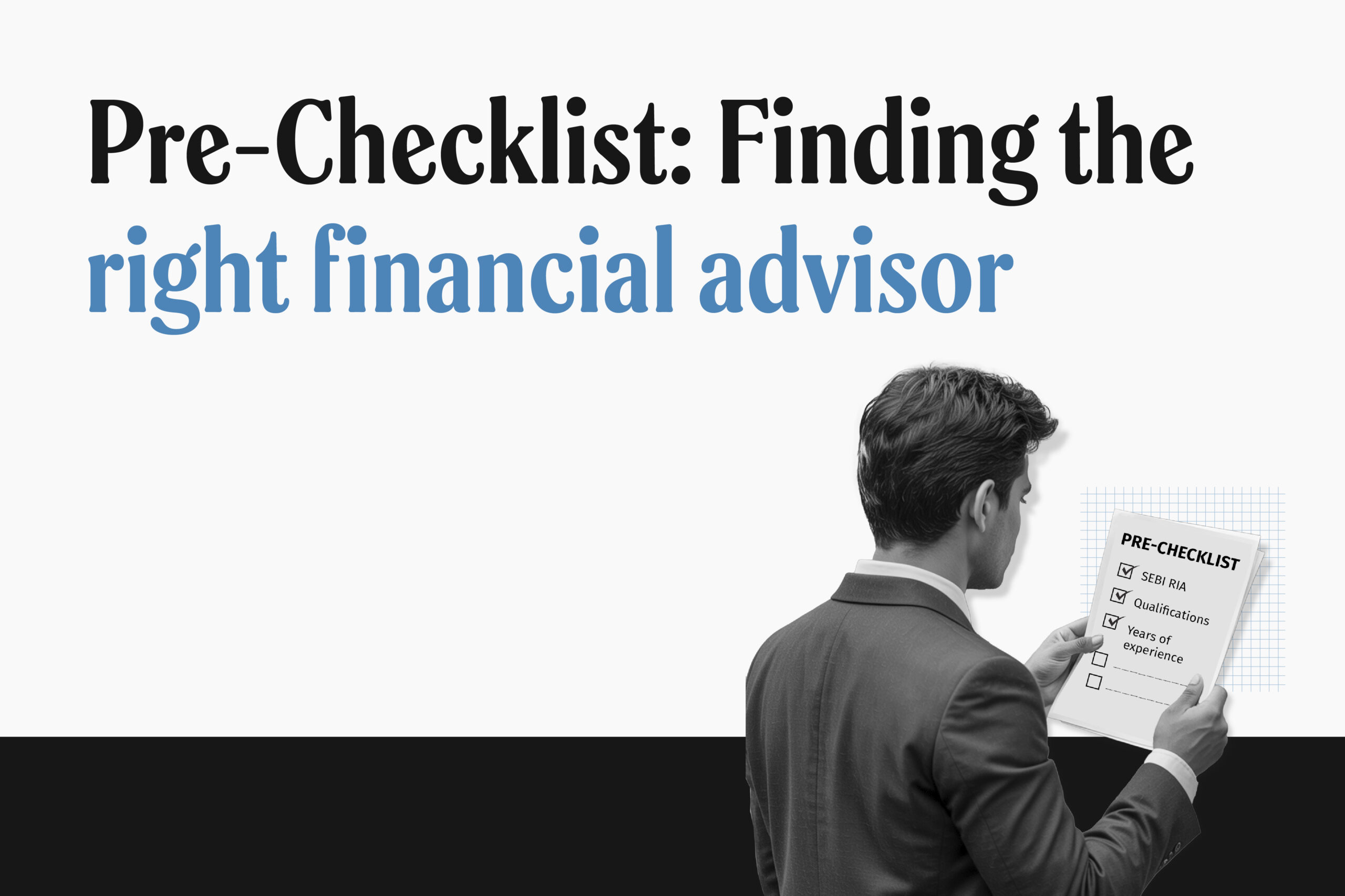
2. Is your financial advisor a SEBI-registered investment advisor (RIA)?
The first step is to verify if your financial advisor is a SEBI-registered investment advisor (RIA). The SEBI (Investment Advisers) Regulations, 2013 define a SEBI RIA as a qualified professional or entity that offers unbiased and personalised financial planning guidance to clients. This means your advisor has fiduciary responsibility (legal and ethical obligation) to act in your best interest.
Financial advisors are required to adhere to fiduciary duties, which include:
- Charging you a fixed fee for their services.
- Not earning commissions by selling you products.
- Disclosing any conflicts of interest.
To find out if your financial advisor is registered with SEBI, you can check the full list of SEBI-Registered Investment Advisors.
3. Is your financial advisor qualified to give you advice?
Next, you should check their qualifications, area of expertise, and experience. Formal qualifications indicate their depth of knowledge. While many advisors may have years of experience, they might lack the technical skills necessary for effective financial planning. It is essential for a financial advisor to possess structured knowledge in areas such as risk tolerance, investment strategies, taxation, insurance evaluation, debt structuring, and estate planning.
To ensure you are working with a knowledgeable advisor, look for those with recognised certifications. Ideal qualifications include Certified Financial Planner (CFP), Chartered Wealth Manager (CWM), NISM Level XA/XB (mandatory for Registered Investment Advisors), and Chartered Financial Analyst (CFA).
Having these certifications ensures that your advisor has met strict educational and ethical standards, making them better equipped to help you navigate your financial journey.
Can you solve this personal finance crossword?
4. How is your financial advisor getting paid?
It’s important to understand how your financial advisor is compensated before you start your journey.
Fee-based on asset under advise: You make an annual payment equal to a percentage of the assets you have under management. As per SEBI’s regulation, this Asset under Advise (AUA)-based fee is capped at 2.5% per year per family for registered investment advisors. AUA is the total value of money or investments that an advisor is helping you manage or guide you on.
Fee-only: You pay a set hourly fee for their services. SEBI allows advisors under this model to charge a maximum of ₹1,51,000 per year per family for all advisory services.
Whether the financial advisor earns through commissions, fixed fees, or a combination of both can impact the types of recommendations you may receive. A commission-driven advisor might be inclined to suggest products that benefit them more than you. In contrast, a fee-only advisor (as per SEBI’s regulation) is typically more neutral. Understanding this early on enables you to assess the advice with a critical perspective rather than blind trust.
5. Check how will your financial advisor follow up after the first meeting
A financial plan is not something you create once and then file away. It requires active monitoring because life changes, and your priorities will shift accordingly. Your financial advisor should be transparent about how frequently your portfolio will be reviewed, any changes made, and how they will communicate updates to you.
The right financial advisor remains connected long after the first meeting, while the wrong one hands you a document and quietly disappears. As you can see, the right advisor doesn’t just recommend products; they help you make sense of your entire financial journey.
1 Finance is a SEBI-registered investment advisor. We have Qualified Financial Advisors who have top certifications, such as CFPCM, CWM®, CFA, CA, NISM XA & XB, QPFP, or SEBI RIA. We work for you and your peace of mind, not targets or commissions. We don’t sell any products. So you get unbiased recommendations.
Holistic financial planning covers important interconnected pillars: investment, insurance, tax strategy, loan, income & expense, retirement planning, and will & estate planning. Each one works together to create clarity and long-term stability. Our financial personality assessment, MoneySign® brings these pillars into a single framework, helping users manage, track, and optimize their entire financial life with precision.