

 Book a free consultation
India’s Great Wealth Transfer: Will and estate planning to take centre stage
By Arman Qureshi
Estate Planning
Jun 9, 2025
Plan Your Retirement with Our Qualified Financial Advisors

Your first financial plan is free
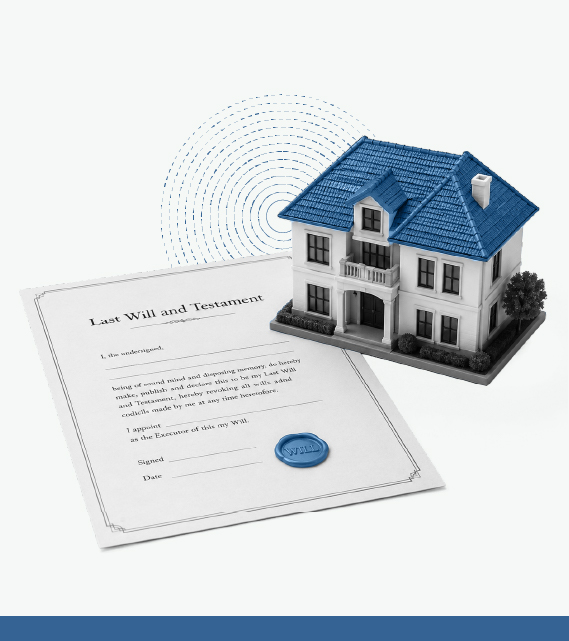
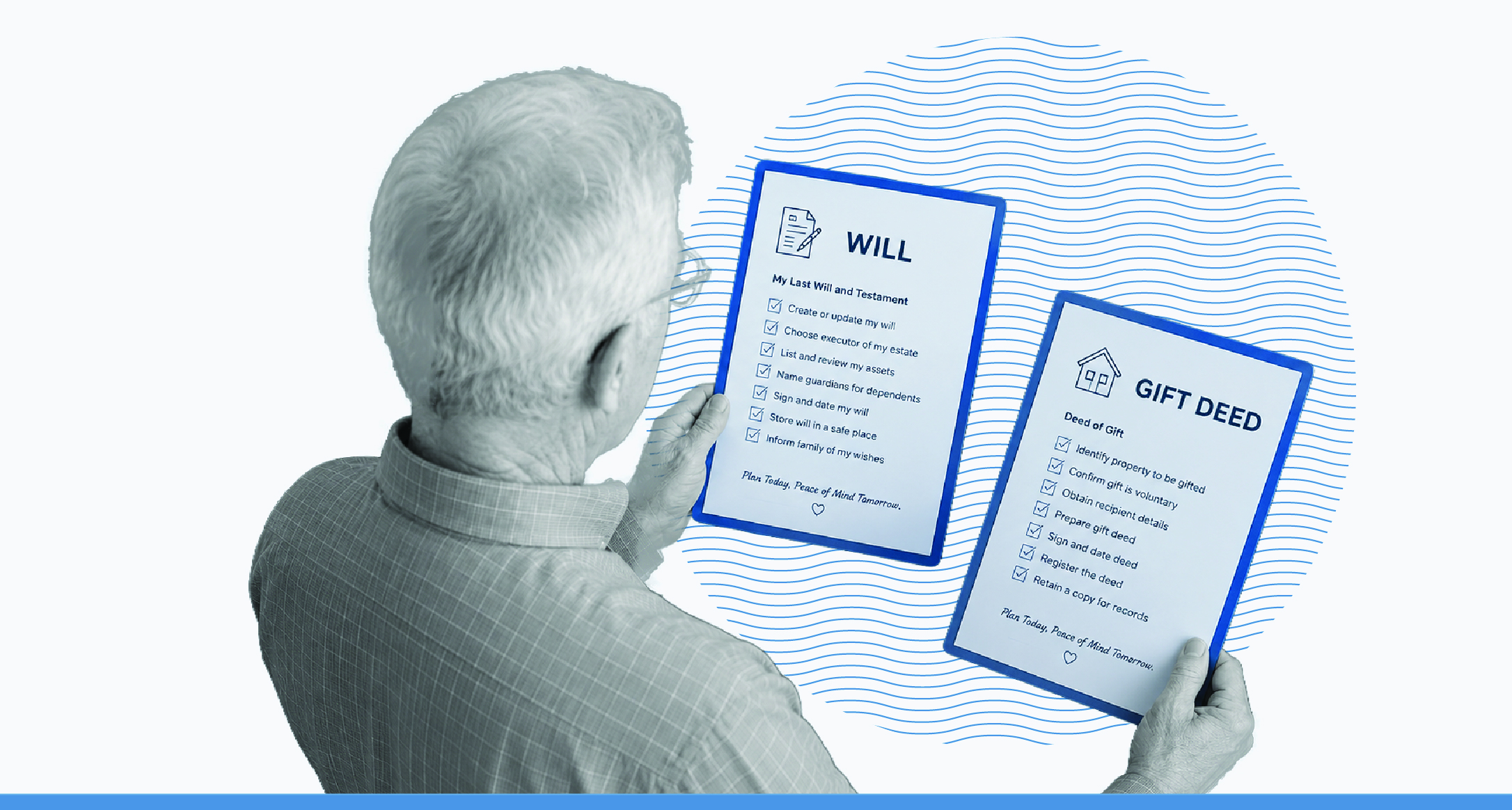
If your family home is meant for the children anyway, why leave it in a Will and wait? Senior citizens raise this query the moment a Will is drafted, because a Will changes nothing until they are gone. The gift deed is what they are asking about, a route that passes the home to your child today instead of after your lifetime. It is a real alternative to a Will.
Senior citizens really want to see their property settled while they are still around, not left for the family to sort out later. A gift deed can do that, moving ownership to your child now, while a Will holds everything in your hands until you are gone. The two answer different priorities, settling matters early against keeping control of them. How that sits with you, alongside the cost and the tax, decides between a gift deed and a Will.
A Will and a gift deed both pass property to your children, but the difference is in the cost, the control, and the protection that follows. Opting for professional estate planning services in India can clarify this transition early, ensuring you align with your overall planning without exposing assets prematurely.
A gift deed transfers ownership the moment it is registered, and it is immediate. The home leaves your name and becomes your child’s in full, carrying every right you once held over it, down to selling it without needing your word. For the transfer to hold, the gift deed must be registered and your child must accept it while you are alive. A registered gift deed is also meant to be final, so once it is done, undoing it is the exception rather than the rule.
A Will works in a different spectrum. It holds only after your demise, so until then nothing moves and the home stays entirely yours. You can rewrite or cancel it whenever you wish, moving a property from one child to another or pulling it back, right up to your last day depending on your family circumstances and dynamics.
Consult a Qualified Advisor today

We will get back to you shortly.
Start with tax, where a gift deed works firmly in your favour. A gift of property from a parent to a child carries no income tax. A parent is a relative under Section 56(2)(x) of the Income Tax Act, and gifts between relatives are exempt whatever their value. You, the giver, pay no capital gains tax either, since the law doesn’t count a gift as a sale, and with no buyer and no price there is no gain to tax. If your child sells the home later, the gain is measured from the price you first paid for it rather than its value on the day of the gift.
For transfers on or after July 23rd, 2024, long-term capital gains are generally taxed at 12.5% and indexation has broadly been removed, subject to a grandfathering relief for resident individuals and HUFs in respect of land or building acquired before July 23rd, 2024. So if the parent bought the home before July 23rd, 2024, the child may still be able to claim indexation (at 20% tax), or choose the 12.5% rate without indexation.
The cost of a gift deed lies in getting it stamped and registered upfront. Stamp duty on a gift made to individuals who qualify as “relatives” under the definition provided in the Income Tax Act, 1961 is often concessional compared with a sale deed, though the applicable rates differ from one state to another. Registration charges apply separately.
Maharashtra charges as low as ₹200 stamp duty on a gift to lineal ascendants or descendants, while Delhi charges approximately 2% of stamp duty value for blood relatives, which on a ₹1.2 crore flat works out to ₹2.4 lakh, plus a ₹1.2 lakh registration fee. So “small” is relative and can still be a significant sum in high-value property states.
Also read: What is a stamp duty on gift deeds?
If the care you expected never comes, the law lets you take the home back. Section 23 of the Maintenance and Welfare of Parents and Senior Citizens Act, 2007 makes that possible. The gift can be cancelled in case of a breach of care or emotional neglect by your children. The claim goes before a Maintenance Tribunal under the Act, a quicker forum than a civil court, which can declare the gift deed void and restore the property to you.
The Supreme Court reinforced this in January 2025, in Urmila Dixit v. Sunil Sharan Dixit. A mother had gifted her property to her son, who then neglected her, and the Court restored it to her and ordered him to return possession. It was held that the care a parent expects need not be spelt out word for word in the deed, since the expectation of being looked after is read into such a gift. This Act exists to protect senior citizens, the Court said, and must be read in their favour.
Two clauses in the gift deed make this safer still. State plainly that your child will maintain and care for you, so the condition sits on record rather than being argued over later. You can also reserve your right to live in the home for the rest of your life, so ownership passes to your child while retaining life interest in the said property. Together, they let you hand over the home without handing over your own security and accommodation facility during your progressing age.
It becomes necessary only if you leave the transfer to default laws taking over your prerogative of deciding. Make neither a gift deed nor a Will, and the home passes by the ordinary law of succession laws governing you after you are not around, the route that asks the most of your children.
To claim it and move the land records into their names, they usually need a legal heir/succession certificate that establishes who the rightful heirs are, followed by mutation of the records. A gift deed removes that step altogether, since the home already sits in your child’s name while you live, and a registered Will gives them a clear basis to claim it, sparing the family the tangle an absent Will creates.
Also read: Succession certificate vs. legal heir certificate: Understanding the difference
Which route fits comes down to what you value more, settling the property now or keeping the freedom to change course. A registered gift deed with a maintenance clause suits the parent who wants assets consolidated and handed on within their own lifetime. Giving assets to family members during your lifetime can be a meaningful decision, but only after you are confident that you have enough set aside for yourself.
Before making any transfer, consider your future living expenses, healthcare costs, and unexpected financial needs. The goal is to support your loved ones without compromising your own financial independence and peace of mind. If you would rather hold full control and keep every decision open until the end, a Will does that, and costs nothing to make.
Evaluating your long-term liquidity remains the core challenge when giving away a major asset. You must ensure your remaining wealth can cover future medical bills and an extended lifespan. A reserved right of residence keeps the roof over your head, yet it puts no cash in your hands, and a home signed over cannot later be sold to fund your own care. Gifting also fixes a division among your children that a Will would let you revisit as their circumstances change. All comes under curated estate planning.
The protection under Section 23 is real, though relying on it means taking your own child before a tribunal, an outcome no parent sets out to reach. The work worth doing comes earlier, in deciding whether to gift at all, how much to keep liquid for yourself, and how to keep your other children whole. A Qualified Advisor/an Estate Planning Lawyer weighs your property against your income, your health, and the rest of your estate, so the route you choose holds up across the years you cannot predict.

The views in the article /blog are personal and that of the author. The idea is to create awareness and not intended to provide any product recommendations.


Plan Your Retirement with Our Qualified Financial Advisors
Your first financial plan is free