
 Book a free consultation
ITR filing 2026: The complete guide for FY 2025-26 (AY 2026-27)
By Arman Qureshi
ITR Filing
Jun 15, 2026

Plan Your Retirement with Our Qualified Financial Advisors

Your first financial plan is free
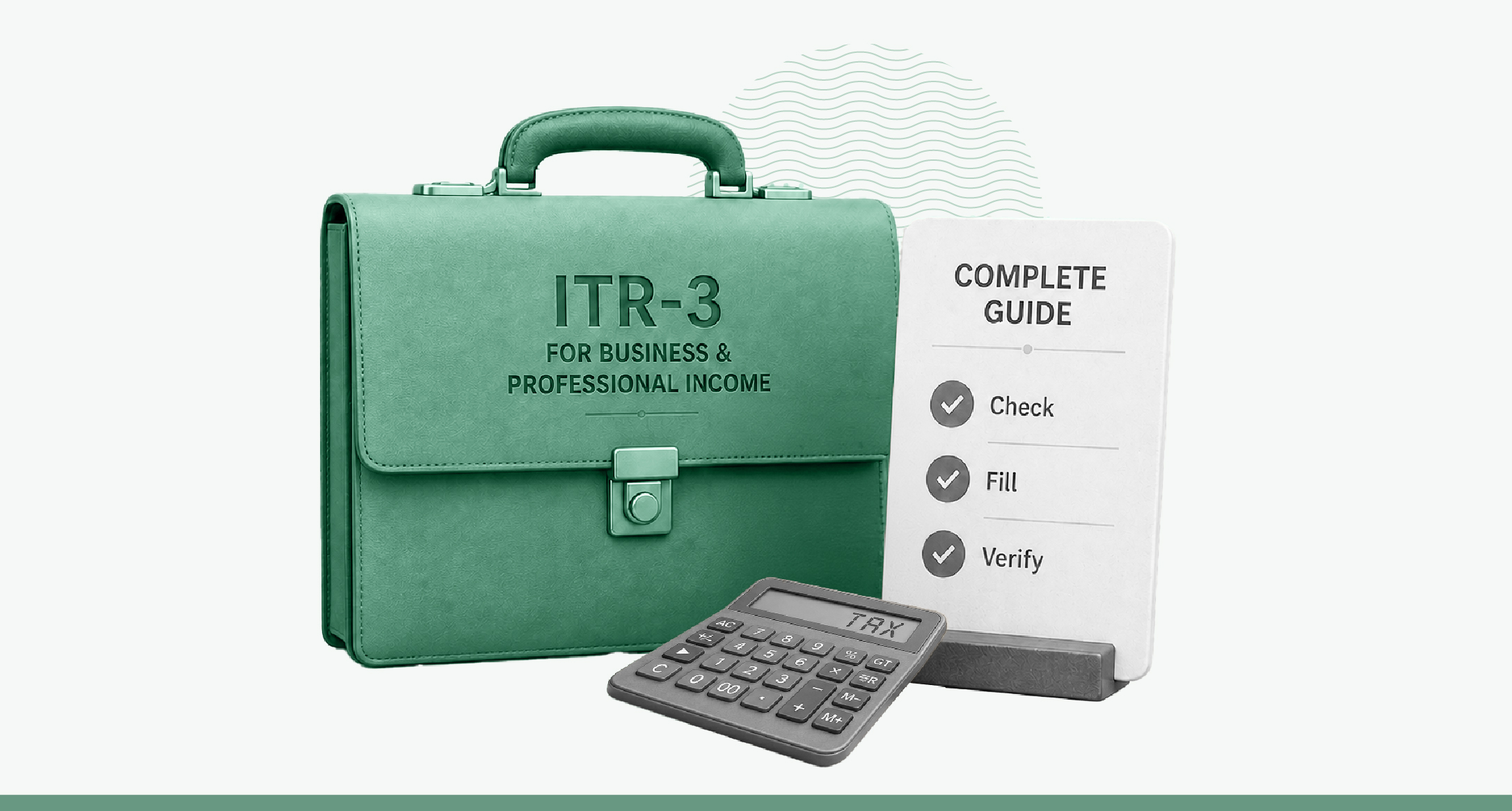
ITR-3 is the income tax return form for individuals and Hindu Undivided Families (HUFs) who earn income from a business or profession and keep regular books of accounts. It is the form used by proprietors, doctors and lawyers in private practice, F&O and intraday traders, and partners in a firm. It is also the most detailed of the individual forms, because it captures business income on top of salary, house property, capital gains, and other income.
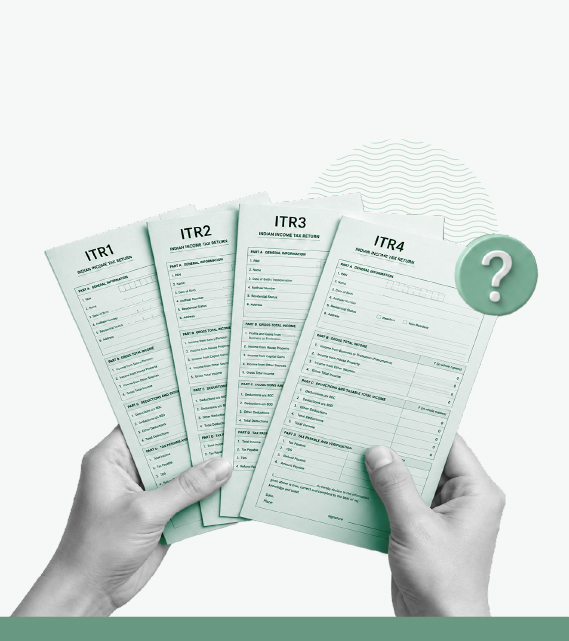
This article explains who must file ITR-3, the tax audit rules that apply to it, what changed for AY 2026-27, and how to file it online. For the wider context, see our complete ITR filing guide for FY 2025-26 and our guide on choosing the right ITR form.
Key takeaways
→ ITR-3 is for individuals and HUFs with business or professional income kept under regular books, and for partners in a firm.
→ The non-audit due date for AY 2026-27 is 31 August 2026. Audit cases are due 31 October 2026.
→ F&O and intraday trading is business income, so traders must use ITR-3, not ITR-1 or ITR-2.
→ If you only use presumptive taxation and earn up to ₹50 lakh, you file ITR-4 instead.
File ITR-3 if you are an individual or HUF with any of the following:
→ Business income kept under regular books, for example, a proprietor running a shop, trading, or manufacturing business who reports actual profit rather than presumptive income.
→ Professional income, including doctors, lawyers, architects, chartered accountants, and other professionals in independent practice who maintain books.
→ Income as a partner in a firm, including salary, interest on capital, or share of profit received from a partnership firm. You report this in Schedule IF.
→ F&O or intraday trading income or loss, which the law treats as business income.
Both business income and other income. ITR-3 also covers salary, house property, capital gains, crypto (Schedule VDA), and foreign assets, so you report everything in one form.
ITR filing 2026: The complete guide for FY 2025-26 (AY 2026-27)
You should not file ITR-3 if you do not have any business or professional income. If you are eligible for ITR-1, ITR-2, or ITR-4, you do not use ITR-3. A partnership firm or LLP files its own return in ITR-5, but an individual partner reports their personal income from the firm in ITR-3.
Both forms are for business and professional income, and people often confuse them.
ITR-4 (Sugam) is for those who opt for presumptive taxation under Section 44AD, 44ADA, or 44AE, with total income up to ₹50 lakh. Income is taken as a fixed percentage of turnover, so detailed books are not needed.
ITR-3 is for everyone else with business or professional income, those who keep regular books, earn above ₹50 lakh, report an actual loss, or fall outside the presumptive rules.
One common case: a presumptive taxpayer who declares profit below the prescribed rate and whose income crosses the basic exemption limit must get a tax audit and file ITR-3 instead of ITR-4. F&O traders reporting a loss also cannot use ITR-4 and must file ITR-3.
The biggest change for AY 2026-27 is the filing deadline. Non-audit taxpayers filing ITR-3 now get time until 31 August 2026 instead of 31 July. This change was introduced through the Finance Act, 2026 and also applies to ITR-4 filers.
A few reporting requirements in the form have also been updated:
Capital gains reporting has been simplified. Taxpayers no longer need to separately disclose gains before and after 23 July 2024, as the entire FY 2025-26 falls under the revised capital gains tax rules.
A new field has been added for reporting capital losses arising from share buy-backs where the related dividend income is taxable under “Income from Other Sources.”
The form now asks for a more detailed breakup of certain claims, including deductions under Section 80C and HRA exemption claimed under Section 10(13A).
In the TDS schedule, taxpayers must mention the section under which tax was deducted. This helps match the information more accurately with Form 26AS.
There is also a new disclosure requirement under Section 44BBC for taxpayers engaged in the business of opeTax audit and ITR-3
A tax audit under Section 44AB applies to many ITR-3 filers, so it is worth knowing the thresholds:
Business: turnover above ₹1 crore. This rises to ₹10 crore if both cash receipts and cash payments are each 5% or less of the total — which covers most fully digital businesses.
Profession: gross receipts above ₹50 lakh.
Presumptive shortfall: if you opted for presumptive taxation, declare profit below the prescribed rate, and your income crosses the basic exemption limit.
F&O trading: audit applies if turnover (the absolute sum of profits and losses) crosses ₹1 crore, raised to ₹10 crore for fully digital trading.
If a tax audit applies, your ITR-3 due date is 31 October 2026, and the audit report (Form 3CD) must be filed by 30 September 2026. The audit must be done by a Chartered Accountant in practice.
| Case | Due date |
| Non-audit | 31 August 2026 |
| Audit report (Form 3CD) | 30 September 2026 |
| Audit cases (ITR) | 31 October 2026 |
| Transfer pricing cases | 30 November 2026 |
A note for partners: your personal ITR-3 deadline follows your firm’s status. If the firm is non-audit, you file by 31 August 2026. If the firm requires an audit, your deadline moves to 31 October 2026. If you are a partner in more than one firm, the later deadline applies.
→ PAN and Aadhaar (linked), and bank account details.
→ Bank statements for the full year (1 April 2025 to 31 March 2026), to prepare your accounts.
→ Profit & loss account and balance sheet for your business or profession.
→ Form 16 / Form 16A, and Form 26AS and AIS/TIS for TDS reconciliation.
→ Capital gains statements, if you sold shares, mutual funds, or property.
→ Audit report (Form 3CD), if a tax audit applies.
→ Proof of deductions, if you opt for the old regime.
Connect with a with Qualified Advisor now

We will get back to you shortly.
→ Log in to incometax.gov.in with your PAN and password.
→ Go to e-File → Income Tax Returns → File Income Tax Return, and select Assessment Year 2026-27.
→ Choose ITR-3 and your status (Individual or HUF).
→ Review the pre-filled data from AIS, TIS, and Form 26AS, and reconcile it with your own records.
→ Fill the business schedules: profit & loss, balance sheet, depreciation, and Schedule BP. Add partnership details in Schedule IF if you are a partner, and audit details if a tax audit applies.
→ Add other income: salary, house property, capital gains, and any crypto in Schedule VDA.
→ Choose your tax regime, claim deductions, and pay any balance tax as self-assessment tax.
→ Submit and e-verify within 30 days through Aadhaar OTP, net banking, or EVC. An unverified return is treated as not filed.
You can also file offline by uploading a JSON file made with the utility.
Frequently asked questions on ITR-3
What is the ITR-3 form?
ITR-3 is the income tax return for individuals and HUFs who have income from a business or profession and keep regular books of accounts. It also covers partners in a firm, and includes salary, house property, capital gains, and other income alongside business income.
Who can file ITR-3?
Individuals and HUFs with business or professional income under regular books, partners in a firm, and F&O or intraday traders. Anyone with business income who is not eligible for the presumptive form (ITR-4) files ITR-3.
What is the difference between ITR-3 and ITR-4?
ITR-4 is for presumptive taxation (income up to ₹50 lakh, no detailed books). ITR-3 is for those who keep regular books, earn above ₹50 lakh, report a loss, or fall outside the presumptive rules.
Which ITR form should an F&O trader file?
ITR-3. F&O and intraday trading is treated as business income, not capital gains, so it must be reported in ITR-3. Filing ITR-1 or ITR-2 for F&O income leads to a defective return notice.
What is the last date to file ITR-3 for AY 2026-27?
31 August 2026 for non-audit cases. If a tax audit applies, the return is due 31 October 2026 and the audit report by 30 September 2026.
Do I need a tax audit for ITR-3?
Only if you cross the Section 44AB thresholds — business turnover above ₹1 crore (₹10 crore if fully digital), professional receipts above ₹50 lakh, or a presumptive shortfall with income above the exemption limit.
How do I file ITR-3 online?
Log in to incometax.gov.in, go to e-File → Income Tax Returns, select AY 2026-27 and ITR-3, reconcile the pre-filled data, fill the business and other income schedules, choose your regime, pay any tax due, submit, and e-verify within 30 days.
How do I download the ITR-3 form?
ITR-3 is filed online rather than as a paper form. To file offline, download the ITR-3 offline (Excel) utility from incometax.gov.in under Downloads, fill it on your computer, generate a JSON file, and upload it on the portal. For AY 2026-27, the ITR-3 Excel utility is available on the portal.
What is the difference between ITR-2 and ITR-3?
ITR-2 is for individuals and HUFs with no business or professional income — it covers salary, capital gains, more than two properties, and foreign assets. ITR-3 is for those who also have business or professional income, including F&O trading, and keep regular books. If you have any business income, you use ITR-3, not ITR-2.
What is the difference between ITR-1 and ITR-3?
ITR-1 is the simplest form, for resident individuals up to ₹50 lakh with salary or pension, up to two houses, interest, and listed-equity LTCG up to ₹1.25 lakh. ITR-3 is for individuals and HUFs with business or professional income kept under books. ITR-1 cannot be used for any business income, while ITR-3 reports business income along with salary, capital gains, and other income.
Is ITR-3 released for AY 2026-27?
Yes. The Income Tax Department has notified ITR-3 for AY 2026-27 and enabled both online filing and the offline Excel utility on incometax.gov.in, so taxpayers with business or professional income can file now.

The views in the article /blog are personal and that of the author. The idea is to create awareness and not intended to provide any product recommendations.


Plan Your Retirement with Our Qualified Financial Advisors
Your first financial plan is free