

 Book a free consultation
Avoid These 8 Common Mistakes While Drafting Your Will: A Comprehensive Guide
Estate Planning
Jul 31, 2023

Plan Your Retirement with Our Qualified Financial Advisors

Your first financial plan is free
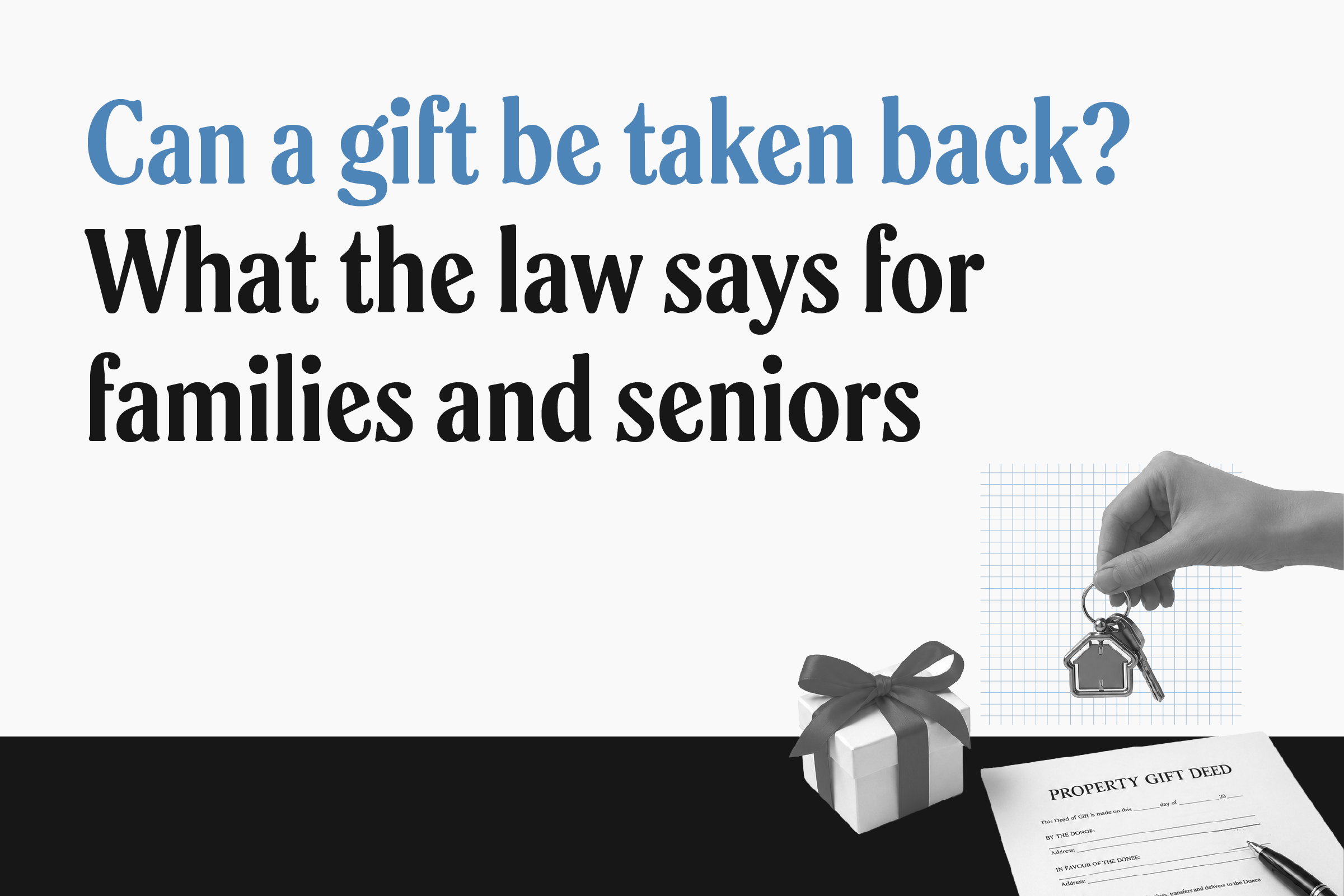
In recent years, many senior citizens in India have gone to court to take back homes they had earlier gifted to their children or daughters-in-law.
The situation is often similar. Parents transfer property out of love, trust, or family pressure. The gift deed is registered, and ownership is transferred. But after some time, relationships break down. The care and support they expected may stop. In some cases, parents even face neglect or harassment.
Many families believe that once a property is gifted, it can never be taken back. But the law is not always that simple. In several cases, courts have allowed senior citizens to cancel gift deeds and recover their property.
This article explains how gift deeds work in India, when a gifted property can be taken back, what legal protections senior citizens have, and what families should think about before transferring property.
Under the Transfer of Property Act, 1882, a gift is generally permanent. Once a gift deed is signed, registered, and accepted by the other person, the property legally becomes theirs.
The law allows a gift deed to be cancelled only in limited situations. One important situation is when the gift deed itself includes a condition saying the gift can be revoked under certain circumstances. If there is no such condition, the person who gave the property usually cannot take it back later just because they changed their mind.
Recent Supreme Court judgments have also confirmed this position. If the gift deed is absolute and has no revocation clause, the donor cannot cancel it on their own.
This is the argument most heirs rely on. Once the property is transferred and registered in their name, they claim the parent no longer has any ownership rights.
In many cases, that is legally correct. But there is another law that gives senior citizens additional protection, and that has changed how courts look at these disputes today.
In 2007, Parliament passed the Maintenance and Welfare of Parents and Senior Citizens Act, 2007. One important part of this law is Section 23.
The law says that if a senior citizen transfers property to someone with the expectation that they will be cared for, and that person later refuses to provide basic care and support, the transfer can be cancelled. The property can be returned to the senior citizen.
The condition of care does not always need to be written in the gift deed. Courts have often said that when parents gift property to children or close family members, there is usually an understanding that the parents will be looked after.
If that support is later denied, courts can treat the transfer as unfair and allow the gift deed to be cancelled, even if it originally appeared permanent or irrevocable.
This law has become an important protection for many senior citizens who transferred property and were later neglected or mistreated by family members.

We will get back to you shortly.
In this case, a widowed father transferred 50% of his flat to his son before his second marriage. The son had told him this was necessary to protect the son’s interest in the property. But after the transfer, the father said that his son and daughter-in-law began harassing him and refused to support him and his new wife.
The Maintenance Tribunal cancelled the gift deed and restored full ownership to the father. The High Court agreed with that decision. The judges said that even though the gift deed did not clearly mention a condition of care, such an expectation was naturally part of the arrangement. Once the son failed to provide support, the gift could be cancelled under the law.
In this case, an 88-year-old woman had gifted property to her daughter-in-law. Later, she claimed that she was neglected and not properly cared for. The court cancelled the gift deed after finding that the senior citizen had been mistreated.
The courts made one point very clear in both cases: when senior citizens transfer property to family members, there is often an expectation that they will be cared for. If that expectation is badly broken, the law allows the gift deed to be cancelled and the property returned.
We will get back to you shortly.
The safest way to avoid future disputes is to include a revocation clause in the gift deed itself. This clause can clearly say that the gift can be cancelled if the person receiving the property fails to care for the donor, mistreats them, or transfers the property without permission.
This makes expectations legally enforceable. Instead of depending only on trust or family understanding, the conditions become part of the document itself.
That is why drafting the gift deed carefully is so important. A properly written deed can clearly mention the responsibilities expected from the person receiving the property. Some families also use separate maintenance agreements or written understandings along with the gift deed.
For many senior citizens, these details can make a major difference later. In property disputes today, the wording of the gift deed often becomes just as important as the property itself.
This is where good professional advice becomes essential. An estate-planning expert can help senior citizens think through the gift carefully before it is made.
The first question is always the same. After the gift, will you still have enough income, savings, and security to live independently? Gifting property is a one-way street, and a senior citizen should never end up financially dependent on the person they have gifted to.
The second question is about structure. Should the property be gifted at all, or is it better handled through a Will or a trust? Should the gift include a revocation clause? Should it be paired with a written maintenance agreement?
These choices look simple from the outside but get complicated very quickly. A Qualified professional can help senior citizens understand the rules, draft the right documents, and avoid the kind of situations that end up in court years later.

The views in the article /blog are personal and that of the author. The idea is to create awareness and not intended to provide any product recommendations.


Plan Your Retirement with Our Qualified Financial Advisors
Your first financial plan is free