

Performance of India’s Nifty 50 Constituents in 2024: Last year in Review
Investing
Jan 3, 2025
Plan Your Retirement with Our Qualified Financial Advisors

Your first financial plan is free
Indians are obsessed with gold. You only need to look at the sheer amount held in households across the country to confirm it — combined, India holds one of the largest private gold reserves in the world.
Traditionally that obsession has been rooted in physical gold, deeply tied to culture, festivals, and rituals. Over time, other avenues emerged: gold ETFs, Sovereign Gold Bonds (SGBs), gold mutual funds, and digital gold. Now there’s a new option — the Electronic Gold Receipt (EGR), which lets you buy real gold on a stock exchange and hold it in your demat account, just like shares, without making charges or storage hassles.
This guide walks you through exactly how to buy EGRs in India, plus what you’re actually buying and how they stack up against other options.
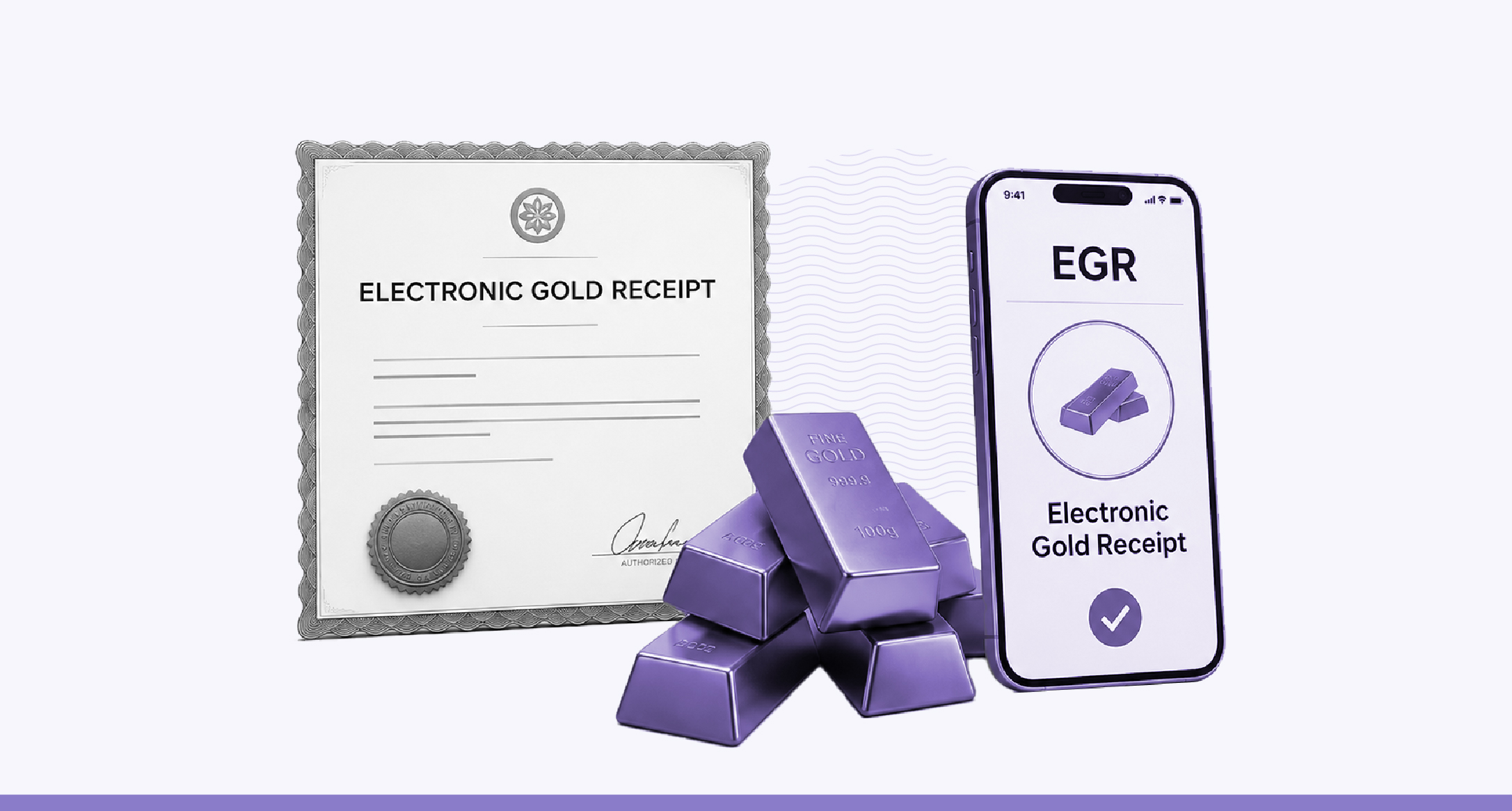
An Electronic Gold Receipt is a digital representation of physical gold ownership that can be traded on stock exchanges like NSE and BSE.
Each EGR is backed 1:1 by actual gold (1 gram of gold = one unit) stored in regulator-approved vaults. So when you buy an EGR, you’re investing in real gold without holding it physically — the receipt simply proves your ownership. EGRs can be bought and sold during market hours like shares, and converted into physical gold whenever you want.
They are classified as securities under the Securities Contracts (Regulation) Act, 1956, which means they carry the same legal protections as equity investments. BSE launched EGRs back in October 2022, and NSE launched its own EGR segment on 4 May — a move expected to boost liquidity and help popularise EGRs as a gold investment.
If you already invest in stocks or mutual funds, the process will feel very familiar.
1. Use your demat account. You can use your existing demat account with any SEBI-registered broker that offers access to the NSE or BSE EGR segment. No new or special account type is needed.
2. Find the EGR listings. EGRs are listed on the exchange like any other security, in defined denominations (such as 10g or 100g) and with set purity standards.
3. Place your order. During market hours (Monday to Friday), buy at the market price or set your own price with a limit order. Regular brokerage charges apply.
4. Wait for settlement (T+1). By the next working day, the EGR is credited to your demat account. At that point you officially own gold — just in digital form.
A note on broker access
EGRs are available on both NSE and BSE, but access still varies by broker. On BSE, only a few brokers currently support the segment, so you may need to hunt for one that does. NSE has only just launched its EGR segment, so wider broker integration may take some time. Check with your broker before assuming the segment is available to you.
Once an EGR is in your demat account, you have three choices:
One of the defining features of an EGR is that you can turn your digital gold into the real thing. When you want delivery, you redeem (give up) your EGR units and the system releases the equivalent gold through an approved process. Two things to remember:
The EGR system brings together several regulated players — the exchange, vault managers, and depositories — all operating under the Securities and Exchange Board of India (SEBI).
When you buy, the trade happens on the exchange during market hours and settles the next day (T+1), after which the EGR is credited to your demat account. Depositories track your holdings and ensure everything matches the real gold in storage. The underlying gold itself sits in secure vaults managed by SEBI-approved vault managers, keeping every EGR backed 1:1 by physical metal.
| Option | Cost | Regulation | Liquidity | Physical delivery? |
|---|---|---|---|---|
| EGR | Depends on exchange/vault managers (e.g. ~0.05%/yr) | SEBI | Exchange | Yes, anytime |
| Gold ETF | 0.25–1.0% expense ratio/yr | SEBI | Exchange | No |
| Sovereign Gold Bond | Nil (+ 2.5% interest income) | RBI/SEBI | Low (secondary market) | No |
| Digital Gold | 3% GST upfront + spread | Unregulated | Platform only | Depends |
| Physical Gold | Making charges + storage | None | Low | Yes |
Even though EGRs are regulated and transparent, they are still market-linked investments. Prices can rise or fall, and factors like taxes, portfolio allocation, and liquidity needs differ for every person. It’s always a good idea to speak with a qualified financial advisor before investing.
What is an Electronic Gold Receipt (EGR)?
An EGR is a digital representation of physical gold ownership that can be bought and sold on stock exchanges like NSE and BSE. Each unit is backed 1:1 by real gold (1 gram = one unit) held in regulator-approved vaults, so an EGR is effectively a receipt proving you own that gold.
Is an EGR the same as owning actual gold?
Yes, in substance. Every EGR is backed by physical gold stored in secure vaults, so you own real metal — you just hold it in digital form in your demat account instead of as a coin or bar.
Are EGRs regulated?
Yes. They are overseen by the Securities and Exchange Board of India (SEBI) and are classified as securities under the Securities Contracts (Regulation) Act, 1956. That means they carry legal protections similar to equity investments.
Which exchanges offer EGRs in India?
Both NSE and BSE. BSE launched EGRs in October 2022, and NSE launched its EGR segment on 4 May.
What purity of gold backs an EGR?
The gold backing each EGR meets defined purity standards set by the exchange, and holdings are tracked by depositories. That’s a key advantage over buying physical gold yourself — there’s no need to worry about authenticity or testing for purity.
Do I earn any interest or dividends from holding an EGR?
No. Unlike Sovereign Gold Bonds, which pay around 2.5% annual interest, an EGR only gains (or loses) value with the price of gold. There’s no separate income from holding it.
Do I need a special account to buy EGRs?
No. You can use your existing demat account with any SEBI-registered broker that supports the NSE or BSE EGR segment.
How do I buy an EGR?
Log in to your broker, search for the EGR listing in its available denomination (such as 10g or 100g), and place a market or limit order during trading hours (Monday to Friday). Regular brokerage charges apply.
When does the trade settle?
On a T+1 basis — the EGR is credited to your demat account by the next working day.
Can any broker offer EGRs?
Not yet. Access still varies. On BSE only a few brokers currently support the segment, and since NSE’s segment is newly launched, broader broker integration may take some time. Check with your broker before assuming it’s available.
Can I sell EGRs whenever I want?
Yes. They can be sold on the exchange anytime during market hours, much like shares.
Is there a minimum quantity to start investing?
Since one unit equals one gram of gold, you can start small — buying as little as a single unit, subject to your broker’s terms. You don’t need to commit to a large amount upfront.
How is the price of an EGR decided?
The price is set on the exchange and tracks physical gold prices closely. There are no hidden dealer markups, which means lower tracking error compared with some other gold products.
Is there a lock-in period?
No. EGRs have no expiry and no lock-in — you can hold, sell, or convert them whenever you choose.
Do I have to convert my EGR into physical gold eventually?
No. Conversion is entirely optional. You can hold an EGR as a long-term investment or sell it digitally on the exchange without ever taking physical delivery.
Can I convert my EGR into physical gold?
Yes. You can request delivery anytime by redeeming (giving up) your EGR units, after which the equivalent gold is released to you through an approved process.
What sizes of physical gold can I get?
Physical delivery is available only in standard denominations — usually 10g or 100g. You can’t withdraw random quantities.
What happens to my gold if I never take delivery?
Nothing changes and no action is needed. The gold stays in the SEBI-approved vault, backed 1:1 to your holding, while depositories keep tracking it. You can continue to hold or sell the EGR digitally for as long as you like.
Do I pay GST on EGRs?
You don’t pay GST while holding or trading EGRs. GST of around 3% applies only when you convert them into physical gold.
What does it cost to hold an EGR?
Costs depend on the exchange and vault managers and are relatively low (for example, around 0.05% per year). Regular brokerage also applies when you buy or sell.
Can I lose money on EGRs?
Yes. Even though they’re regulated and transparent, EGRs are market-linked — their price moves with the price of gold and can go up or down. Consider speaking with a Qualified Financial Advisor before investing.
Published on 04 Jun 2026, 7:54 pm IST

The views in the article /blog are personal and that of the author. The idea is to create awareness and not intended to provide any product recommendations.


Plan Your Retirement with Our Qualified Financial Advisors
Your first financial plan is free