
 Book a free consultation
How to Choose the Correct ITR Form: A Guide to Choosing the Right Income Tax Return Form
ITR Filing
Jun 30, 2024

Plan Your Retirement with Our Qualified Financial Advisors

Your first financial plan is free
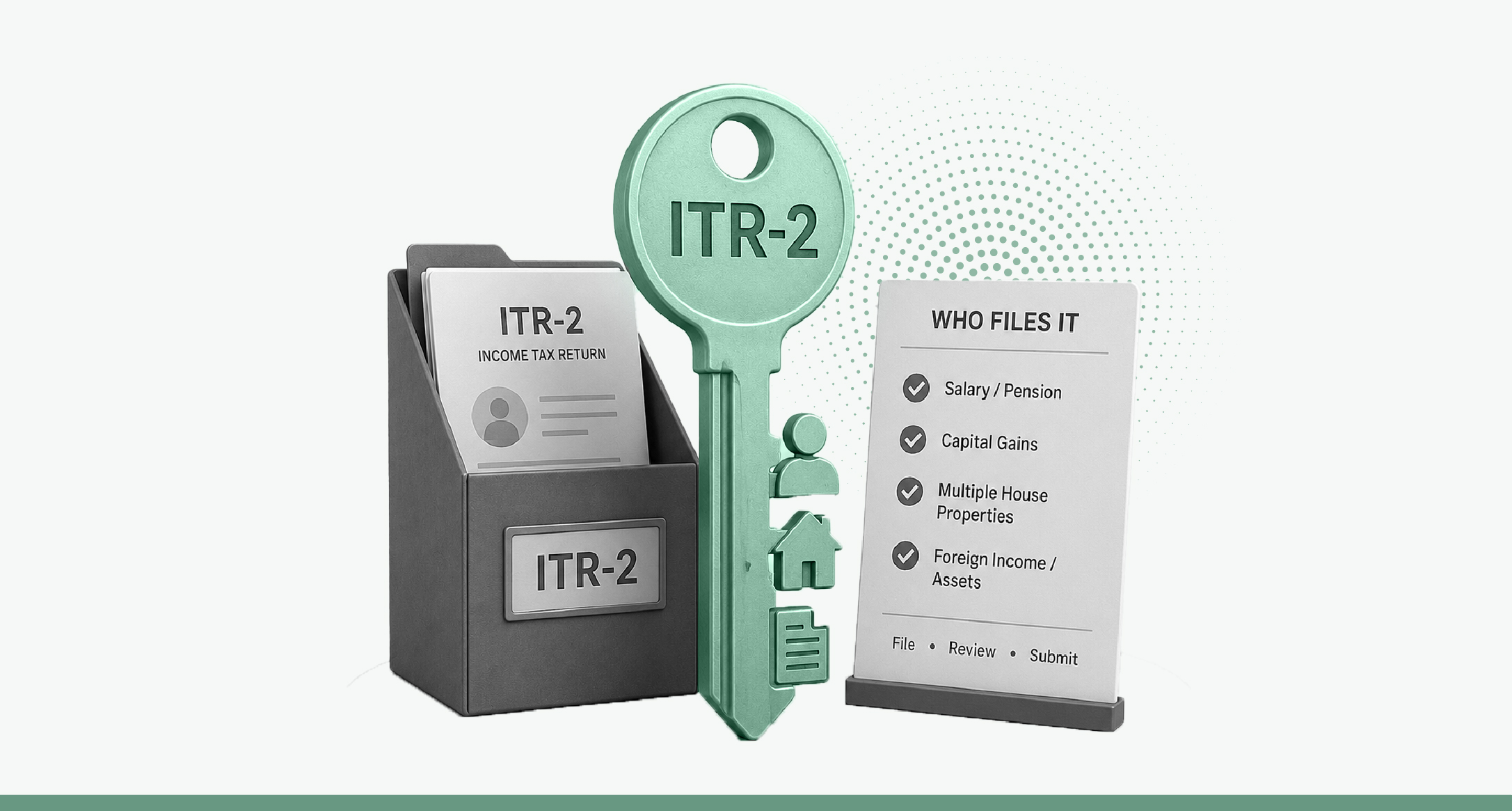
If you have capital gains, own more than two house properties, hold foreign assets, or have a total income above ₹50 lakh, you will likely need to file ITR-2. This income tax return form is meant for individuals and HUFs who do not have business or professional income but have more complex sources of income than those covered under ITR-1. In simple terms, ITR-2 is used when your income includes capital gains, foreign income or assets, multiple properties, or other situations that make you ineligible for ITR-1.
This guide explains who should file ITR-2, what has changed for AY 2026-27, the documents you’ll need, and how to file it online, step by step.
You should file ITR-2 if you are an individual or a Hindu Undivided Family (HUF) without income from business or profession, and any of the following apply:
→ You have capital gains, any short-term capital gains, long-term gains above ₹1.25 lakh, or gains from selling property, gold, unlisted shares, or other assets.
→ You own more than two house properties.
→ Your total income exceeds ₹50 lakh.
→ You have foreign income or foreign assets, or signing authority in an account outside India.
→ You earn income taxable at special rates — such as winnings from lotteries or horse races.
→ You have income from Virtual Digital Assets (crypto), reported under Schedule VDA.
→ You are a company director or hold unlisted equity shares.
→ You have losses to carry forward or set off under any head.
→ You are a non-resident (NRI) or resident but not ordinarily resident (RNOR).
→ Your agricultural income exceeds ₹5,000.
In short: if you’re not eligible for ITR-1 and you don’t run a business or profession, ITR-2 is very likely your form.
ITR-2 is not for you if you have any income from a business or profession, in that case you need ITR-3 (or ITR-4 if you’re under the presumptive taxation scheme).
One useful point: if you are eligible for the simpler ITR-1, you can still choose ITR-2, but there’s rarely a reason to. ITR-1 is shorter, more pre-filled, and quicker. Always use the simplest form that fully fits your income profile.
For information on filing deadlines, tax regimes, required documents, and the filing process, refer to our complete ITR filing guide for FY 2025–26.
Several changes apply this year, most of them flowing from the capital-gains overhaul introduced by the Finance Act, 2024 and reflected in the notified ITR forms.
Several changes apply this year, most of them flowing from the capital-gains overhaul introduced by the Finance Act, 2024 and reflected in the notified ITR forms.
1. Capital-gains date split removed
For AY 2025-26, taxpayers had to separately report gains earned before and after 23 July 2024 because tax rates changed during the year.
Since the revised capital-gains regime applies throughout FY 2025-26, this bifurcation has been removed. Capital gains are now reported without a date-wise split.
2. Old capital-gains rate fields removed
The earlier schedules contained fields linked to the old 15% short-term capital gains rate under Section 111A and the old 10% long-term capital gains rate under Section 112A.
These have been updated to reflect the revised rates:
3. Schedule AL threshold increased to ₹1 crore
The requirement to disclose assets and liabilities in Schedule AL now applies only if total income exceeds ₹1 crore.
Previously, the threshold was ₹50 lakh.
4. Share buy-back loss reporting added
A new field allows taxpayers to report capital losses arising from share buy-backs, subject to the applicable conditions and corresponding dividend income disclosures.
5. More detailed deduction disclosures
Certain claims now require additional reporting.
Examples include:
Taxpayers may need to provide a more granular break-up of the amounts claimed.
6. TDS section code now required
The TDS schedule requires taxpayers to specify the section under which tax was deducted.
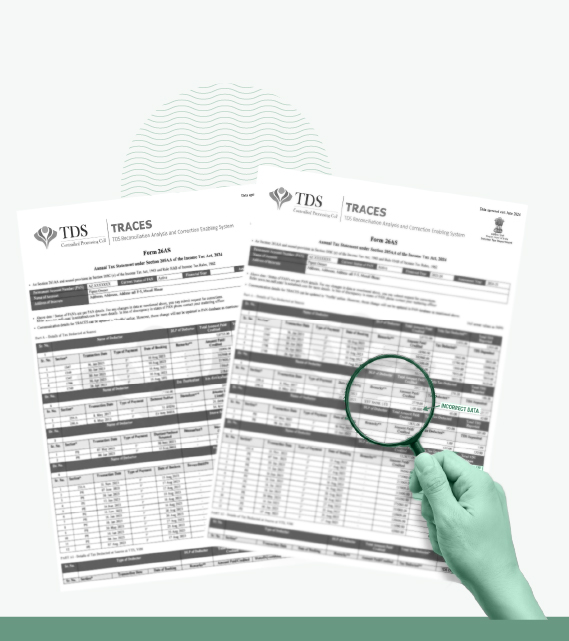
This improves matching with Form 26AS and other tax records.
→ PAN and Aadhaar (linked)
→ Bank account details
→ Form 16 from your employer
→ Form 16A for TDS on interest and other non-salary income
→ Form 26AS
→ AIS (Annual Information Statement)
→ TIS (Taxpayer Information Summary)
→ Capital gains statements from brokers, mutual fund platforms, or property transactions
→ Foreign asset and foreign income details, where applicable
→ Proof of deductions such as: Life insurance premiums, PPF contributions, ELSS investments, rent receipts, donations, other eligible deductions under the old tax regime.
Book a consultation Qualified Advisors

We will get back to you shortly.
Step 1: Log in
Log in to the Income Tax e-filing portal using your PAN and password.
Step 2: Start a new return
Go to: e-File → Income Tax Returns → File Income Tax Return
Select:
Step 3: Review pre-filled information
The portal imports information from:
Carefully compare this data against your own records. Capital gains information is one of the most common causes of mismatches and notices.
Step 4: Complete the relevant schedules
Fill in:
Step 5: Select tax regime and compute tax
Choose either:
Claim eligible deductions and exemptions where applicable.
Pay any self-assessment tax due before submission.
Step 6: Submit and e-verify
Submit the return and complete e-verification within 30 days through:
An unverified return is treated as not filed.
Deadline and late filing
The due date for filing ITR-2 for AY 2026-27 is 31 July 2026 for taxpayers not subject to audit.
One consequence is particularly important for investors:
If you miss the due date, you generally lose the ability to carry forward capital losses to future years.
Capital losses can otherwise be carried forward for up to eight assessment years and used to offset eligible future gains.
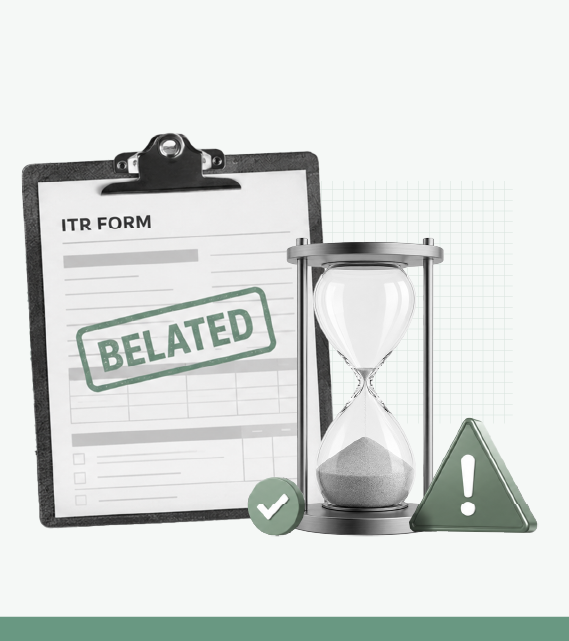
A belated return can still be filed up to 31 December 2026, subject to:
What is the ITR-2 form?
ITR-2 is an income tax return form for individuals and HUFs who do not have income from business or profession but have more complex income such as capital gains, multiple properties, foreign assets, crypto income, or total income above ₹50 lakh.
Who can file ITR-2?
Individuals and HUFs with capital gains, more than two house properties, foreign income or assets, income above ₹50 lakh, crypto income, directorships, unlisted shares, or losses to carry forward — provided they do not have business or professional income.
What is the difference between ITR-1 and ITR-2?
ITR-1 is meant for simpler cases involving salary, pension, limited house-property income, and certain other income sources.
ITR-2 is designed for taxpayers with capital gains, foreign assets, multiple properties, income above ₹50 lakh, directorships, unlisted shares, or other situations that make them ineligible for ITR-1.
Can I report crypto income in ITR-2?
Yes. Income from Virtual Digital Assets (VDAs) can be reported in Schedule VDA.
Crypto gains are generally taxed under Section 115BBH.
Can an NRI file ITR-2?
Yes. NRIs commonly use ITR-2 when they have taxable income in India but do not have business or professional income.
What is the last date to file ITR-2 for AY 2026-27?
The due date is 31 July 2026 for non-audit cases.
How do I file ITR-2 online?
Log in to the e-filing portal, select AY 2026-27 and ITR-2, reconcile the pre-filled data with your records, complete the applicable schedules, pay any tax due, submit the return, and e-verify it within the prescribed time limit.

The views in the article /blog are personal and that of the author. The idea is to create awareness and not intended to provide any product recommendations.


Plan Your Retirement with Our Qualified Financial Advisors
Your first financial plan is free