Popular searches
Get to know your policy better
Product scoring may vary based on gender, age, policy tenure and sum assured.

Gender
Age Group

The lowest age in the selected range is considered for price evaluation (e.g., 25 - 29)
The lowest age in the selected range is considered for price evaluation (e.g., 25 - 29)
Sum Assured
A Cautionary Tale for Long-Term Investors

INTRODUCTION
Recent AMFI data (December 2024) shows that sectoral and thematic funds accounted for ~26% of the total growth and equity-orientated funds in the December 2024 quarter.
Moreover, 95% of the funds raised by newly launched growth and equity schemes in the same quarter were from new sectoral and thematic schemes. But are investors investing in sound long-term investments, or are they being pushed into sector-specific schemes by AMCs?
METHODOLOGY
Our analysis confirms that mutual funds that rank among the top performers rarely maintain their rankings in the subsequent years.
Investors are sold funds that have delivered the best short-term returns; however, historical data proves that relying on the past 1-2 years performance as an indicator of future returns can be misleading, especially in sector-specific
To understand the performance of these funds, we conducted an analysis of direct growth equity mutual fund schemes over a 10-year period from March 31, 2015, to March 31, 2025. The study examines fund performance across three-year periods, i.e., 2015-2018, 2016-2019, etc., comparing how top-ranking funds in one period rank in the next three-year period.
The study does not include index funds and ETFs. Returns until December 31, 2024, are considered for data.
FINDINGS
Our analysis confirms that mutual funds that rank among the top performers rarely maintain their rankings in the subsequent years. Funds that were among the top 10 performers in 2015-17 ranked in the 50s to 100s in 2018-20, and many of the funds even failed to appear in the top 100 by 2022-25.
You can take a look at the findings below:
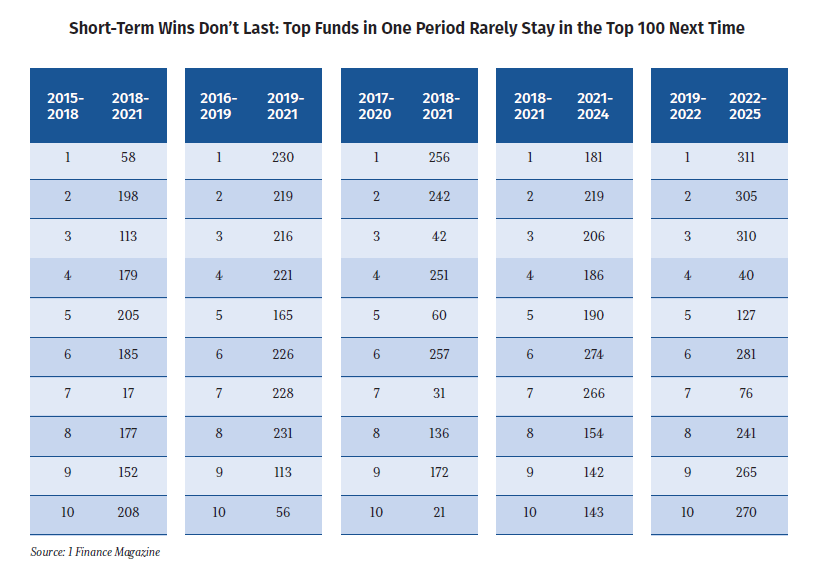
Investors are sold funds that have delivered the best short-term returns; however, historical data proves that relying on the past 1-2 years performance as an indicator of future returns can be misleading, especially in sector-specific funds. Many funds that achieve the top ranks are due to a temporary boom in a specific sector. Investors are led to believe these funds will continue to outperform when their success is actually short-lived.
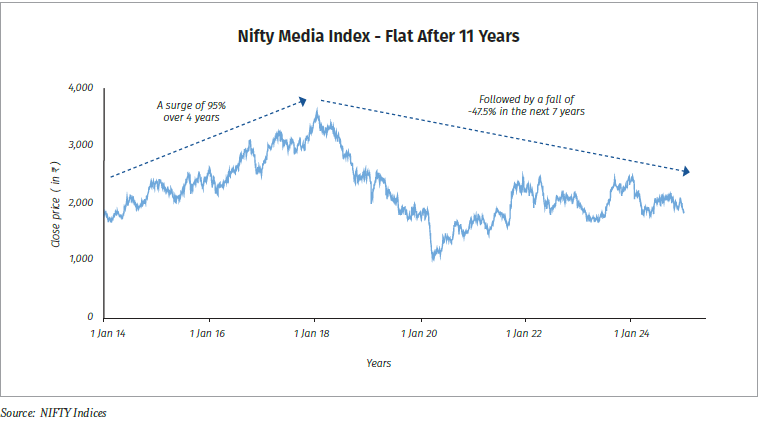
The volatility of sector-specific funds is a major contributor to their irregular performance. While certain sectors may outperform during specific market conditions, these funds are prone to drastic drops when the sector's momentum fades.
This volatility is reflected in the recent trend of AMCs launching a significant number of these funds. In the last three years alone, 94 sectoral/thematic funds have been launched.
These sector-specific funds have seen tremendous gains in certain periods but have also crashed in rankings in the next period.
Despite this, sectoral/thematic funds are aggressively launched; 94 such funds have been launched in the last 3 years.
While SEBI limits AMCs to one fund per category (such as large-cap, mid-cap, etc.), there is no such restriction for thematic funds.
This means that AMCs can launch multiple thematic funds, each targeting a different sector or theme, which allows them to capitalise on investor enthusiasm for sector-specific growth.
EXPENSE RATIO BREAKDOWN AS PER SEBI
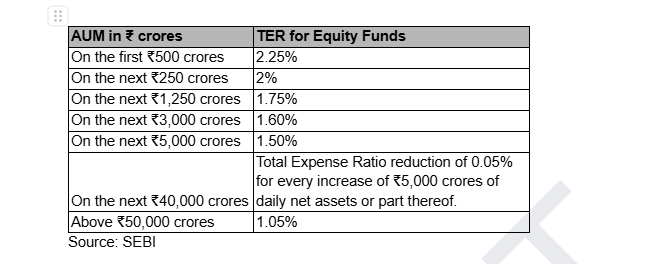
Investing in fresh inflows gets higher commissions compared to older funds with larger AUMs. This propels distributors to sell new fund offers (NFOs) for more funds and a higher fee, as new funds with smaller AUMs charge higher expense ratios.
Thus, distributors benefit from the increased commissions, and AMCs market new funds more even though they may not offer better returns. This prioritises short-term inflows over long-term investments, as distributors focus on selling NFOs rather than recommending funds with proven track records.
CONCLUSION
Sectoral and thematic funds have become popular due to their potential for short-term higher returns during specific market cycles. But historical data shows us their irregular performance, which highlights the risks of investing in these funds for the long term.
Investors must exercise caution and opt for long-term investment planning rather than relying on recent returns as an indicator of future performance, especially for sector-specific funds.
Table of Contents
Share:


Share: