Popular searches
Get to know your policy better
Product scoring may vary based on gender, age, policy tenure and sum assured.

Gender
Age Group

The lowest age in the selected range is considered for price evaluation (e.g., 25 - 29)
The lowest age in the selected range is considered for price evaluation (e.g., 25 - 29)
Sum Assured
Property Perspectives: Mr. Mayank Saksena's Take on Real Estate Trends
Can you share the key legal factors affecting property value that one should consider before making a purchase?
Often, when dealing with a Grade A developer, your life will become much simpler. However, if you buy a property from someone else, you must take care that the property has not been sold to another person before, and does not have any encumbrance from any third parties, maybe a bank or a financier. Ensuring a clean title for the property is paramount. And frankly, in the Indian real estate landscape, two crucial aspects determine your ability to enjoy a property are-Title and Physical Possession. If either of the two go wrong, then your property investment can go to waste.
If you buy a property that has title issues, it inevitably leads to legal battles in court, preventing you from fully enjoying the property. Even with clear title ownership, a property becomes useless if possession is elusive, as obtaining possession could involve legal proceedings.
Why do you think real estate prices are constantly on the rise despite Fed rates soaring to decadal highs and even India seeing a sharp repo rate increase from 4% to 6.5%?
Interestingly, if you look at real estate, it's a cyclical business, typically lasting for eight years.Even before COVID, when the interest rates were lower, , the industry was dying. However,post-COVID, people realised that you must own it so that when such situations happen, you can be in your own space securely. Over time, a lot of unfavourable situations did occur where landowners asked their tenants to move out,among other things. That is where the shift in mindset happened, encouraging more people to consider homeownership.
Also, post-COVID, we realised that small homes are insufficient because you now need a dedicated working space in your home. The necessity to create home offices drove a demand for larger and more versatile living spaces. The average size of apartments increased from 1,150 sq. ft. in 2018 to 1,225 sq. ft. in 2023 (Source: TOI)
Also, people now want to upgrade their lifestyles. Interestingly, if you look at it, real estate in India is still very affordable. Prices in Bangalore, for instance, may seem high at ₹10,000 per square foot, but the construction costs have also risen from ₹2,500 per square foot to ₹3,500-₹4,500 per square foot.
From a rental perspective, India has consistently maintained a $1 dollar rent model. Even with the dollar-rupee exchange doubling from ₹40 to ₹80, rents have similarly doubled, aligning with international norms. Surprisingly, India remains one of the cheapest countries globally in terms of both property prices and leasing.
And when it comes to buying a house, the average time to repay a loan in India is around 5.5 to 6 years, significantly less than the 12-20 years’ worth of salary commonly seen in international markets.
To put it into perspective, if your annual salary is ₹30 lakhs, you can purchase a property valued between ₹1.2 and ₹1.5 crores today.. Even in Mumbai, (excluding South Bombay) the suburbs offer affordable options, allowing you to pay off your property in just 5 to 6 years.
Where do you anticipate property prices in cities like Delhi and Mumbai, both residential and commercial, heading in the next 5 to 10 years?
Predicting property prices beyond 3 to 5 years is akin to crystal ball gazing, given the numerous variables at play. However, in the short term, the outlook is positive. The demand is robust, especially in cities like Gurgaon, where the average price hovers between ₹15,000-₹20,000 per square foot. We can expect an annual appreciation in the range of 7-10%, varying due to factors like location and developer reputation.
In Mumbai, South Bombay commands a staggering ₹1 lakh rupees per square foot. The sustained demand for luxury properties fuels an anticipated annual price growth of 10-15%. Opting for a premium product from a reputable developer could potentially yield even higher appreciation.
Why have property prices surged in areas like Gachibowli, Hyderabad, in the last 3 to 5 years?
Hyderabad’s real estate surge, particularly in Gachibowli, was a catch-up story. During the state division, prices remained stagnant, and Gachibowli experienced a delayed price catch-up. Comparing it to Singapore, Gachibowli offers a mini-Singapore experience with top companies, excellent infrastructure, and a walk-to-work environment. Despite this, it’s still affordable, considering the quality and convenience. Paying ₹10,00-₹12,000 per square foot for a housing space within 25 minutes of the airport, a 5-minute commute to the office and mall, is remarkable.
Given that Hyderabad was largely a catch-up story, do you foresee a similar catch-up scenario in any other market in the country in the next 3 to 5 years?
One market with clear potential for significant catch-up is Bangalore. In Whitefield particularly, the property price catch-up is happening but that's like a microcity in itself.
Similarly, if you look at the western suburb in Mumbai, you'll see a huge amount of catch-up happening in the micro market. That is because the price appreciation in Bombay has not been much. If you look at the sales philosophy, the price appreciation has not been so drastic.
I expect a significant catch-up in the Gurgaon market, particularly along the Dwarka expressway. With the development of the embassy area in Dwarka and substantial infrastructure projects, areas like Park Gurgaon, which weren't commanding a premium, are poised to see a notable rise.
What are your opinions on India's real estate market and expectations for 2024?
I’m extremely confident that 2024 will be a shining year yet again. We will see a lot of good projects getting launched and a lot of large consumption happening. There's still a lot of pent-up demand, which needs to be serviced. Even still, it is expected that the property prices will appreciate in 2024.
For those contemplating home purchases and hesitating due to concerns about rising interest rates and housing prices, it's essential to act promptly. Delaying might result in missed opportunities. The more you wait, the more you lose. But at the same time, it doesn't mean that you buy the wrong house from the wrong developer.It is crucial to emphasize that buyers should conduct thorough research and make informed decisions after proper background checks, and consultations if required. Purchasing the right property from the right developer is key. I think the story is intact for the next 2-3 years, so you can't really go wrong unless you bet on the wrong developer.
Hopefully, with ongoing infrastructure development, our country is experiencing a golden era currently. It's anticipated that this trend will persist. If nothing abruptly goes wrong in our country, it will continue to grow at a massive pace in the next 5 to 10 years. Earlier, India didn't receive as much global attention, but now there's a notable shift. I can provide a few examples to illustrate this.
Consider the pharmaceutical sector in India, the amount of investment and exports that are expected from this country are massive. Further, looking at the Automobile or Electronics Industry, when you slice and dice, there is a huge potential and upward trend. These are some of the golden periods that the country is witnessing.
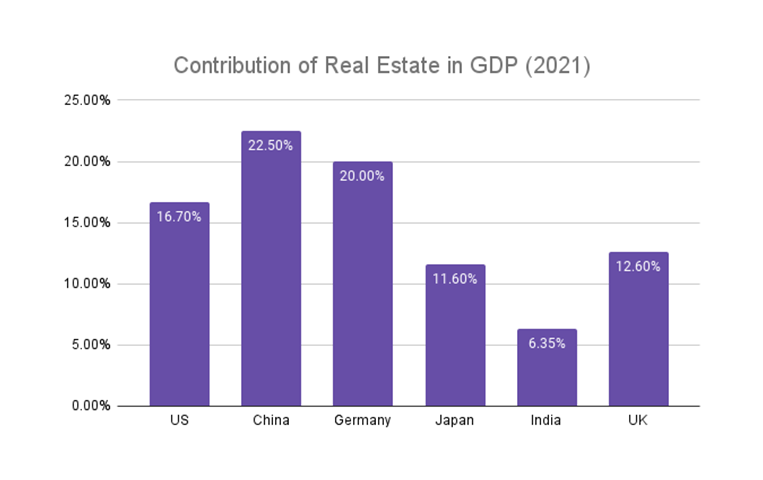
Despite its current contribution of 5-6% to the Indian GDP, I firmly believe the real estate sector has the potential to play a more substantial role, ideally around 18-20%. This presents a significant growth opportunity for the industry.
Questions
Share:


Share:
