
 Book a free consultation
One on One with a Wedding Emcee
Personal Finance
Jan 10, 2024

Plan Your Retirement with Our Qualified Financial Advisors

Your first financial plan is free
A SEBI-registered investment adviser (RIA) is a financial professional licensed by SEBI to help you plan and manage your investments the right way. Their role is to understand your goals, risk profile, and overall situation, and then guide you so your money decisions actually support the life you want.
In exchange, they charge you a transparent, pre-agreed fee instead of earning commissions on product sales.
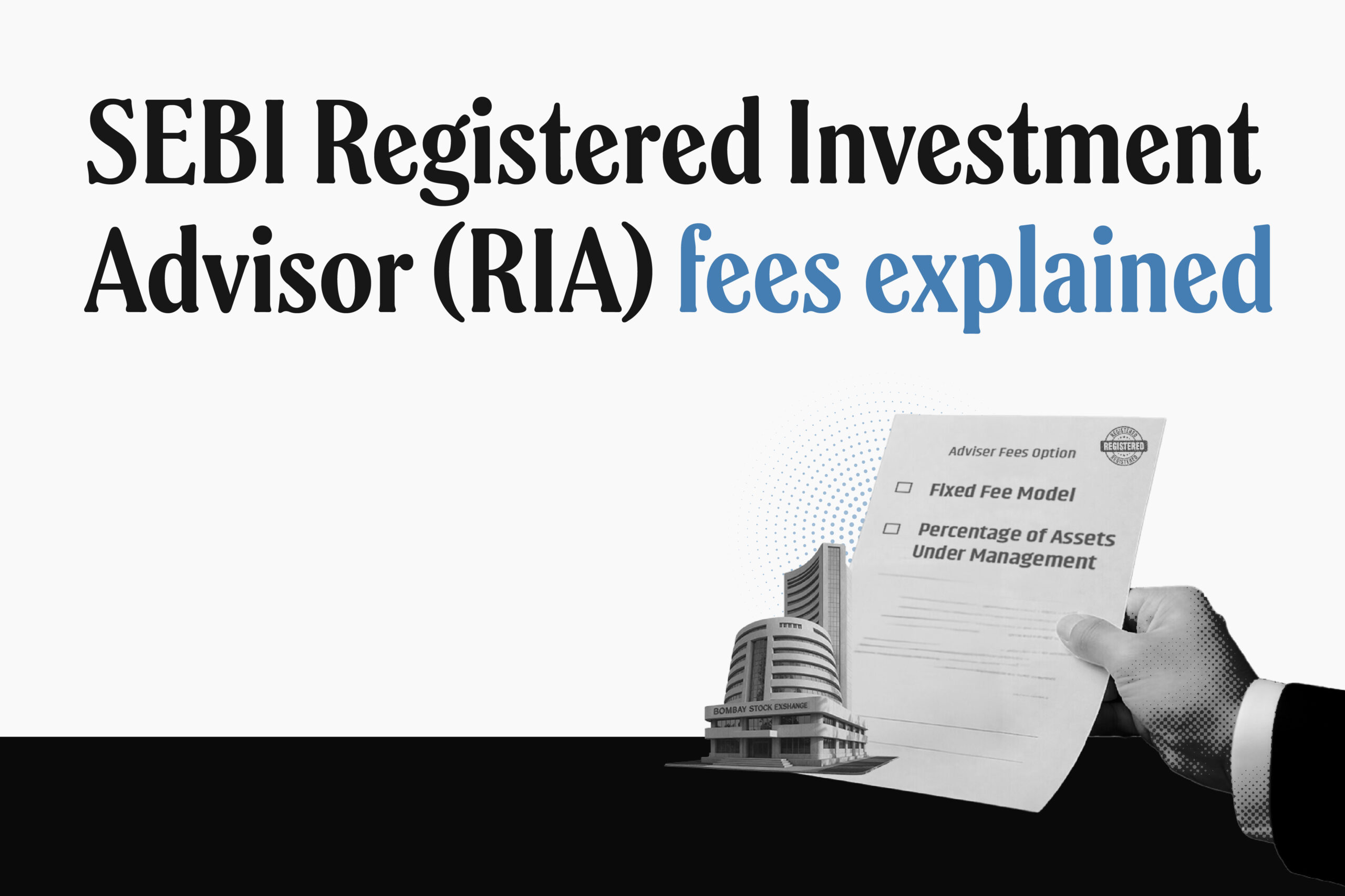
Under SEBI regulations, RIAs can charge you either a fixed rupee fee or a fee linked to the assets they advise on, within prescribed caps and conditions.
In practice, this means two families with very different portfolios or levels of complexity may pay very different fees, even with the same adviser. Some prefer a simple flat or retainer-style fee, while others are comfortable with a percentage-of-assets model that goes up or down with their portfolio size.
This article breaks down the main ways an RIA can legally charge you under SEBI rules, what those models look like in real life, and how to decide which structure makes the most sense for your situation.
As per SEBI there are only two ways SEBI RIAs can charge you.
In the fixed fee model, you pay a set amount every month, quarter, or year. No matter how much your money grows or falls, the fee stays the same. SEBI allows RIAs to charge up to ₹1.51 lakh per year per family. This fee does not change based on how much money you have invested.
The RIA charges a small percentage of your total investments. The fee can be typically between 0.5% to 1.5% per year. SEBI allows RIA to charge maximum up to 2.5% per year per family. For example, if you have ₹50 lakh invested, the RIA can charge up to ₹1.25 lakh per year (2.5% of ₹50 lakh).
Pros of fixed fee model
Cons of fixed fee model
Pros of AUA (percentage) model
Cons of AUA (percentage) model
Book a FREE consulation with us!

We will get back to you shortly.
The choice between the fixed fee model and the AUA (percentage) model depends on your financial situation and preferences.
If you want to know exactly how much you will pay every year and like simple, predictable costs, the fixed fee model is better. It works well if your investments are stable or you don’t want your fees to change with market ups and downs.
If you want your advisor to grow with you and earn more only when your money grows, the AUA (percentage) model is better.
This model is good if you have a large portfolio or expect your investments to increase over time. Many people like this because the advisor’s success is linked to your success.
Think about what matters more to you—predictable costs or sharing growth with your advisor. Pick the model that fits your financial personality and comfort level.
Connect with a Qualified Financial Advisor in seconds
We will get back to you shortly.
Whichever model you choose, the idea is that the fee leaves enough room in your budget for actual investing and sensible tax planning, not the other way around.
SEBI has clearly stated what your RIA cannot charge you.
Any advisor charging these ways is not following SEBI rules. You should avoid them.
Before you hire an RIA, they must give you a written agreement. The agreement should clearly state:
SEBI also requires RIAs to tell you about the Centralized Fee Collection Mechanism, which is a safe way to pay your advisor’s fees.
This transparency protects you and makes sure there are no surprises later.
Book a FREE consulation with us!
We will get back to you shortly.
SEBI’s rules on RIA charges make India’s advisory system safe and transparent. By capping fees, banning commissions, and requiring clear agreements, SEBI protects your money. When choosing an RIA, always check if they are registered with SEBI, ask about their exact fee structure—fixed or percentage—and get a written agreement before you give them any money.
Make sure they are fee-only advisors with no hidden commissions. The right RIA will be transparent, honest, and focused on your financial goals—not on earning extra money through commissions. This is what makes SEBI RIAs trustworthy professionals you can rely on for your financial future.
Published on 05 Feb 2026, 6:22 pm IST

The views in the article /blog are personal and that of the author. The idea is to create awareness and not intended to provide any product recommendations.


Plan Your Retirement with Our Qualified Financial Advisors
Your first financial plan is free