
 Book a free consultation
What Amex credit cardholders need to know about the e‑voucher platform change from Gyftr to ShopWise
By Arman Qureshi
Credit cards blogs
Feb 9, 2026

Plan Your Retirement with Our Qualified Financial Advisors

Your first financial plan is free
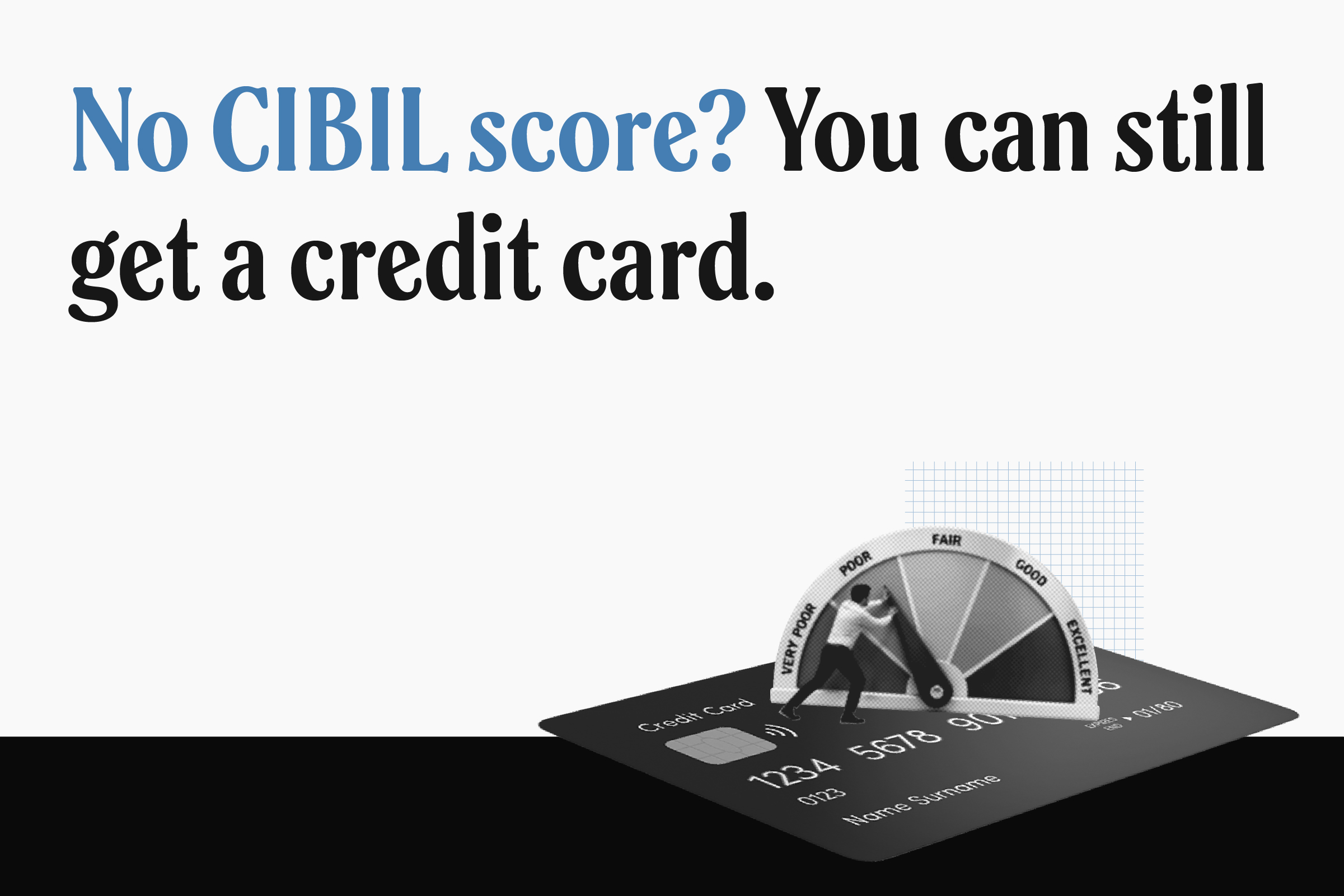
For many people, getting the first credit card can feel like being stuck in a loop. Banks want your CIBIL score, but you need a loan or credit card to build that score in the first place. So if you’re starting from zero, the system doesn’t do much. But getting a credit card without a CIBIL score is not entirely impossible.
It’s just that the route for getting the credit card without a CIBIL score is not the usual one. In this article, we’re going to break down exactly how to get a credit card without a CIBIL score.
A CIBIL score is a three-digit number between 300 and 900 that tells banks/fintech how reliable you are with borrowed money. When you have no score, banks have no credit history and hence lending institutions have no way to judge your risk.
If you’re a student, a new professional, a homemaker, or someone who has always used cash and debit cards, you likely fall into the “no credit history” bucket.
But there are some ways you can get your first credit card without the cibil score or a credit history. Let’s know about them.
This is the easiest and most reliable way to get a credit card without a CIBIL score. Secured credit card basically means you get a credit card against your security (here it means FD). You need to open a fixed deposit with a bank, and in return, they give you a credit card with a limit that’s usually 80% to 90% of your FD amount.
The bank holds your money as a safety net. If you don’t pay your credit card bill, they simply deduct it from your FD. With secured credit cards, there’s no risk to the bank, hence they don’t need to check your credit score.
The minimum FD amount usually can start from Rs 10,000 to Rs 25,000, depending on the bank. Your FD keeps earning interest even while it backs your credit card. And every payment you make on this card gets reported to credit bureaus, which helps you build a CIBIL score over time.
Also read: Credit Cards against FD in India: A comprehensive list for 2026
If you have a family member, parent, spouse, or sibling, who already has a credit card, you can request an add-on card in your name. This is basically a secondary card linked to their main account.
The primary cardholder is responsible for all payments, but the card has your name on it. Some banks report add-on card usage to credit bureaus, which can help you start building your own credit history.
This is a good option for getting a credit card without CIBIL score if you just need a card for everyday purchases and don’t mind your family member seeing your spending. Many banks issue add-on cards for free or at a very low annual fee.
If you’re a college student, several banks offer student credit cards specifically designed for you. These cards come with lower limits (usually between Rs 10,000 and Rs 50,000) and don’t require a CIBIL score or income proof.
Some of these require you to have an education loan with the bank or maintain a specific balance, so check the eligibility criteria before applying.
Student cards are a smart way to build credit early. Just remember to use them responsibly. If you miss a payment even for once, it will show on your profile for years to come.
Let our Qualified Financial Advisors guide you

We will get back to you shortly.
If you’ve recently started working and have a salary account with a bank, ask them about pre-approved credit card offers. Banks often extend credit cards to their salary account customers based on their monthly income, even without a CIBIL score.
The card limit is typically 2 to 3 times your monthly salary. You’ll need to show your salary slips or bank statements, and the approval process is usually faster than regular applications.
Walk into your branch or log into your net banking portal to check for pre-approved offers. This works especially well if your salary has been credited to the same account for at least three to six months.
Several fintech companies and co-branded cards have emerged that use alternative data to assess creditworthiness. Instead of just looking at your CIBIL score, they consider factors like your spending patterns, UPI transaction history, and savings behavior.
Cards like the Slice card, Uni Card, and certain OneCard variants have relatively relaxed eligibility criteria. Some of these are technically prepaid or pay-later products rather than traditional credit cards, so read the terms carefully to understand what you’re signing up for.
These options work well for young professionals and gig workers who may not fit the traditional banking mold.
Let our Qualified Financial Advisors guide you
We will get back to you shortly.
Getting the card is just the beginning. Here’s how to build a strong credit score from day one.
→ Pay your bills in full and on time, every single month. Even one missed payment can damage your score significantly. Set up auto-debit if you’re forgetful.
→ Keep your credit utilization below 30% of your limit. If your card has a Rs 20,000 limit, try not to spend more than Rs 6,000 per month on it.
→ Avoid applying for multiple cards at once. Each application creates a “hard inquiry” on your credit report, which can temporarily lower your score.
→ Check your CIBIL score every few months. You can do this for free on CIBIL’s official website or through most banking apps. It usually takes three to six months of regular card use before your first score appears.
Getting a credit card without CIBIL score might not be the straightforward process but it’s not an impossible one. Secured credit cards against FDs are the most straightforward route for most people, while add-on cards and student cards work well for specific situations.
Pick the option that fits your life right now, use the card responsibly for a few months, and you’ll have a solid CIBIL score to work with when you want to upgrade to a better card later. Everyone starts somewhere, and the sooner you begin, the sooner you’ll have the credit history to back your future financial goals.
Published on 28 Apr 2026, 12:17 pm IST

The views in the article /blog are personal and that of the author. The idea is to create awareness and not intended to provide any product recommendations.


Plan Your Retirement with Our Qualified Financial Advisors
Your first financial plan is free