



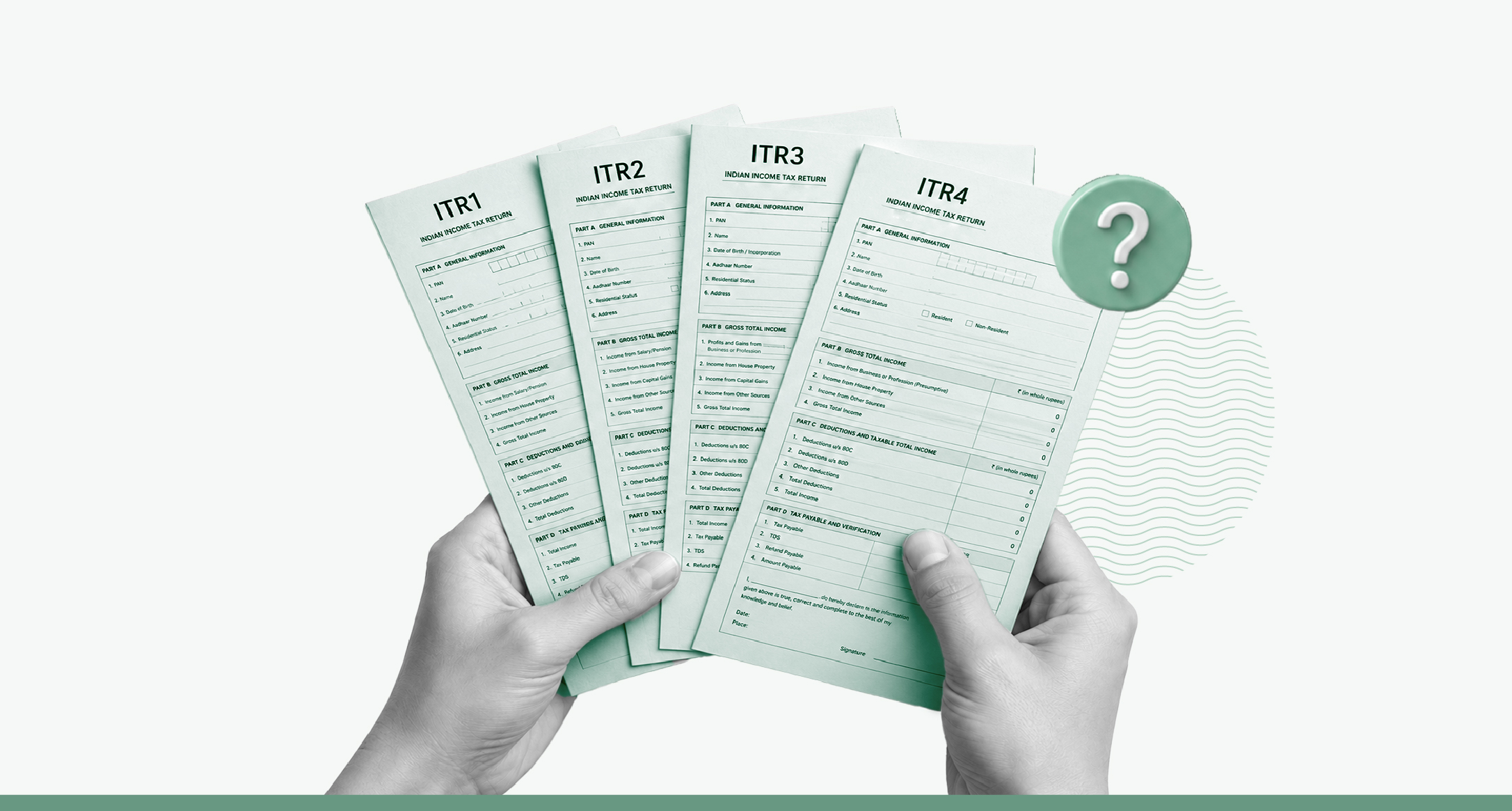
ITR-1 vs ITR-2 vs ITR-3 vs ITR-4: Which ITR form should you file?
Choosing the wrong ITR form is tax season's easiest own goal.
Missing the ITR filing deadline can leave you wondering what happens next. Whether you can still file your ITR? What you may have to pay, and whether you have missed your chance completely? The good news is that missing the original ITR filing deadline doesn’t mean you can’t file your return.
For TY 2026-27, there is a defined process for filing after the deadline, with specific timelines, fees and tax implications. This guide explains what you can do at each stage and the right next steps without worrying unnecessarily.
When you miss the original ITR filing deadline of 31st July, your immediate recourse is to file a belated return under Section 139(4) of the Income Tax Act 2025. For TY 2026-27, the belated return can be filed until 31 December 2026. However, filing past 31st July may attract applicable late-filing fees and interest, as explained below.
Belated ITR filing overview for TY 2026-27
| Legal window | Till 31st December 2026 |
| Late filing fee (Section 234F) | ₹5,000 for income more than ₹5 lakh ₹1,000 for income ₹5 lakh or under |
| Interest (Section 234A) | 1% per month on unpaid taxes starting 1st August |
| Loss carry-forward scope | Limited strictly to ‘Income from House Property’ |
| Eligibility to revise | Fully allowed under Section 139(5) until 31st December |
Read in detail: Belated ITR filing explained: Who can still file and what are the consequences?
If you have missed both the original and belated ITR filing deadlines, an Updated Return (ITR-U) provides another route to voluntarily disclose income that wasn’t reported earlier or correct an inaccurate tax return. It isn’t simply an extension of the belated filing window.
For TY 2026-27, an ITR-U can generally be filed within 48 months from the end of the financial year following the relevant tax year, subject to the conditions prescribed under the Income Tax Act 2025.
Some key instructions about ITR-U:
Don’t confuse this additional income tax with advance tax. Advance tax is tax paid during the tax year towards your expected tax liability, whereas the additional income tax on an ITR-U is an extra amount payable when you use the updated-return mechanism.
A revised return is used when you discover an error or omission in a return you have already filed. Even if your original return was a belated return, you can still revise it to correct the relevant details, provided the revised return is filed within the prescribed deadline.
Selecting the correct filing section on the income tax portal ensures your return processes without technical mismatches.
| Parameter | Belated Return | Revised Return | Updated Return (ITR-U) |
|---|---|---|---|
| Main purpose | File a return after the original due date | Correct or update a return already filed | Voluntarily disclose additional income or correct the tax position |
| Prior return required? | No | Yes. You must have filed an original or belated return. | You can file an ITR-U even if no original, belated or revised return was filed. |
| When can it be filed? | After the original due date, within the prescribed belated-return period | Within the prescribed time limit for revising a return | Within 48 months from the end of the financial year succeeding TY 2026-27, subject to eligibility conditions |
| Additional cost | Late-filing fee and applicable interest may apply | Generally no additional tax merely for revising, though any resulting tax and interest must be paid | Additional income tax applies at 25% to 70% depending on when the ITR-U is filed |
| Can you claim a refund? | Yes, subject to the applicable rules | Yes, subject to the applicable rules | No increase in refund is permitted |
| Can you reduce your tax liability? | Yes, if the return correctly reflects your tax position | Yes, where permitted through a valid revision | No; an ITR-U cannot generally be used to reduce the tax liability determined through an earlier return |
One important distinction: a belated return is still your original return filed late, while a revised return corrects an already filed return. An ITR-U serves a different purpose altogether; it allows you to voluntarily update your tax position after the normal filing/revision routes, but with additional restrictions and additional tax.
Step-by-Step action plan to file right now
Yes. Filing late under Section 139(4) of the Income Tax Act 2025 doesn’t disqualify you from receiving legitimate tax refunds. If excess TDS or advance tax was deducted, the Income Tax Department will process your return and issue your refund with statutory interest under Section 244A.
Once the belated return deadline passes, which is 31st December 2026 for TY 2026-27, you can’t file it. Your only remaining administrative option is filing an Updated Return (ITR-U) under Section 139(8A). This requires paying an additional 25% or 50% tax surcharge and is only permitted if you have additional tax to pay.
Yes. TDS deducted by your employer is treated as tax already paid and can be claimed as credit in your ITR. If you file your TY 206-27 return after the deadline, the applicable late-filing fee applies under Section 234F; the fee is ₹1,000 for total income ₹5 lakh or below, and ₹5,000 if it exceeds ₹5 lakh. However, no fee is applicable if your total income is below the basic exemption limit.
If you verify it after 30 days, the date of verification is treated as the date on which the return was furnished, and the applicable consequences of late filing may follow. If you don’t verify the income tax return, it is treated as invalid. In cases of genuine delay, you can submit a condonation request to the Income Tax Department, but the return becomes valid only if the request is approved.

The views in the article /blog are personal and that of the author. The idea is to create awareness and not intended to provide any product recommendations.


Choosing the wrong ITR form is tax season's easiest own goal.

Non-Resident Indians (NRIs) pay income tax in India only on income that is taxable in...