



Can I file ITR for the last 3 years?
Whether you’re applying for a bank loan or filing a visa application, income tax re...

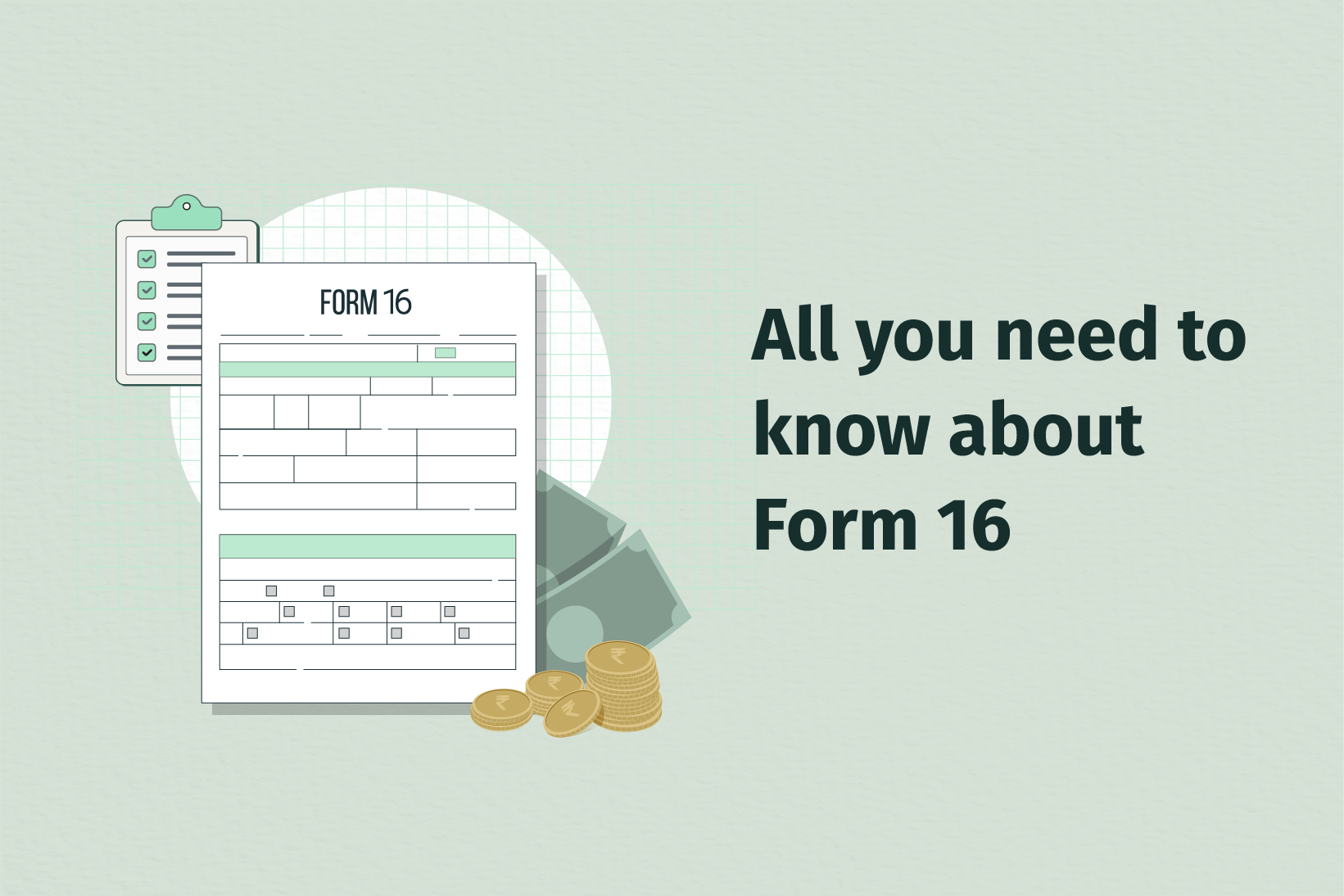
For millions of salaried employees across India, Form 16 is not just a document, it’s a key to decoding their tax filings. If you have ever wondered what Form 16 really means, how it helps in filing your income tax return (ITR), or why it lands in your inbox every year around June, you’re not alone. With each financial year, the importance of Form 16 only grows, especially as tax compliance becomes more digital and transparent. Let’s walk through everything you need to know about Form 16 for financial year 2024–25 (assessment Year 2025–26), including the changes, the components, and why it matters so much.
Form 16 is a document sent by an employer to their paid employee, verifying that tax has been deducted at source (TDS) from salary income and lodged with the Income Tax Department. Think of it as your salary TDS summary for the financial year. It provides a detailed breakup of your earnings, deductions, taxable income, and the amount of tax deducted and deposited by your employer on your behalf. If your employer has deducted any TDS from your salary during the year, they are legally required to issue you this form. This form is essential for filing your income tax return, as it validates your tax credit and provides the necessary income details.
Form 16 is split into two sections, Part A and Part B. Part A is a consolidated statement of all tax deducted and deposited with the government. It includes details like the employer’s and employee’s name, PAN, TAN, address, the period of employment, and the quarterly summary of TDS deducted and deposited. It’s system-generated through the TRACES portal, which ensures authenticity. This section is particularly helpful if you’ve switched jobs during the year, it will show TDS entries from multiple employers separately. Importantly, it also contains the unique TDS certificate number, which can come in handy during e-filing or while responding to any notice.
While Part A gives a bird’s-eye view of tax deducted, Part B dives deeper. It acts like a salary statement for the year. It shows a detailed salary breakup, basic pay, HRA, allowances, perquisites, and any other components that make up your gross salary. From there, it deducts exemptions under Section 10 (like HRA or LTA), standard deduction (currently ₹50,000 for old regime and ₹ 75,000 for new regime) and professional tax (if applicable). It then outlines deductions under Chapter VI-A, such as Section 80C (for investments like PPF, LIC), 80D (for health insurance), 80G (donations), and others. What you’re left with is your taxable income and the total tax payable, matched against the TDS already deducted. This part is usually prepared by your employer based on the declarations and proofs you submit.
Many people confuse Form 16 with other similarly named forms. Here’s a quick table to clarify:
| Particulars | Form 16 | Form 16A | Form 16B |
| Purpose | TDS certificate for salary income | TDS certificate for non-salary income | TDS certificate for property sale |
| Issued By | Employer | Deductor (banks, companies, etc.) | Buyer of immovable property |
| Frequency | Annually | Quarterly | Per transaction |
Only salaried individuals who have had tax deducted from their salary during the financial year are eligible to receive Form 16. If no TDS was deducted, say your total income was below the basic exemption limit, your employer may not issue Form 16. However, many companies still choose to provide a salary statement that mimics the format of Form 16 for internal consistency and to help employees file ITRs easily. It’s important to note that even if your income is exempt or falls below the taxable limit, you may still file ITR voluntarily, and having a Form 16, if issued, simplifies the process.
The structure of Form 16 remains largely the same for FY 2024-25, but a few notable updates have been implemented for this year:
These changes aim to make income reporting more accurate and reduce the scope for errors or omission in your tax return.
Form 16 is like your tax passport, it’s an official acknowledgment that your employer has deducted tax and deposited it with the government. It ensures you get proper credit for taxes paid and acts as proof of income for multiple purposes. Whether you’re applying for a home loan, visa, scholarship, or just trying to keep your financial records in order, Form 16 is one of the most trusted documents. It also serves as a checklist for deductions you’ve claimed and allows you to cross-check entries with your Form 26AS or AIS. In case of any mismatch, your Form 16 becomes the first document of reference during rectification or assessment.
For the financial year 2024–25, employers are required to issue Form 16 to their salaried employees by June 15, 2025. This deadline comes after the due date for filing the quarterly TDS return (Form 24Q) for the fourth quarter, which is May 31, 2025. Once the TDS return is filed and processed, Form 16 can be generated and issued. Most companies follow this timeline and typically provide Form 16 either via email or through their employee HR portal. If you haven’t received your Form 16 by the third week of June, it’s a good idea to reach out to your payroll or HR department to request it or check if there are any delays.
Smart tax planning is not about saving at the last minute—it’s about aligning taxes with your overall financial planning. Our Qualified Financial Advisor can help you structure your finances and taxes for maximum efficiency.
While it’s not legally mandatory to have Form 16 to file your ITR, it makes your life significantly easier. The form has all the information you need, your salary structure, TDS deducted, total deductions claimed, and tax paid. If you use income tax platforms or consult a tax professional, Form 16 acts as the base document. It helps ensure you’re not underreporting or overreporting income or deductions. Moreover, if your Form 26AS or AIS shows TDS entries, but you don’t file your ITR using Form 16 or similar documents, you may end up missing credit or triggering a notice.
Form 16 may look like just another tax form, but it’s one of the most crucial documents in a salaried individual’s financial journey. Whether you’re planning to file your ITR, apply for a loan, or even assess your annual financial health, this form is indispensable.

The views in the article /blog are personal and that of the author. The idea is to create awareness and not intended to provide any product recommendations.
Form 16 contains a complete summary of your salary, deductions, and TDS, making it easier to report income accurately in your ITR. It also helps in cross-verifying data with Form 26AS and AIS.
Yes, you can file ITR without Form 16 using your salary slips, Form 26AS, and other income proofs. However, having Form 16 simplifies the process and reduces chances of errors.
If no TDS is deducted, your employer is not legally bound to issue Form 16. Still, many companies voluntarily provide a similar salary statement for employee convenience.
You will receive separate Form 16s from each employer who deducted TDS during your employment. Ensure all are accounted for while filing your ITR to avoid underreporting.
Immediately inform your employer and request correction in their TDS return (Form 24Q). Accurate Form 16 is essential to avoid notices or tax credit mismatch.
No, Form 16 only includes salary-related income and the TDS deducted by your employer. Any income from interest, rent, capital gains, or freelance work must be reported separately while filing your ITR. You'll need Form 26AS or AIS to check TDS on non-salary income.


Whether you’re applying for a bank loan or filing a visa application, income tax re...
Earning above ₹10 lakh annually places you in one of the highest income tax bracket...

As the tax filing season approaches, it’s crucial to prepare for filing your In...