



Understanding Sector Funds: A Deep Dive into Niche Mutual Fund Investm...
Explore the potential of sector funds as we demystify this overlooked, yet potent, ca...

 Book a free consulation
Get advice on investing, insurance, tax planning, loan management, etc, for free with a Qualifed Financial Advisor

Most people don’t really choose mutual funds. They grab whatever has the highest past returns or whatever saves the most tax before the deadline. When the market turns or life changes, that approach tends to unravel, and suddenly the “top-performing mutual funds” feels like the worst possible choice.
When you start with a randomly chosen mutual fund scheme, you end up reacting to NAVs, rankings, and star ratings. When you start with yourself, with your goals, time horizon, cashflow needs, and risk comfort, you centre the entire investment around your life. Mutual funds are meant to serve your financial life. The question is whether the ones you have picked actually do that. Let’s see how that shift changes everything.
An investment cannot be evaluated properly unless its role within your broader financial life is clearly defined. Mutual funds operate within the realities of your income stability, existing savings, and upcoming goals and responsibilities, and liquidity needs.
An investor selects an equity mutual fund purely because it has delivered strong returns, without considering that the money may be needed within two years. When a market correction coincides with an urgent expense, the investment is redeemed at a loss and the fund is blamed. With context, the short-term requirement would have been parked in a debt mutual fund and only long-term surplus invested in equity investments. Liquidity needs would then be met without disturbing growth investments, allowing compounding to continue uninterrupted.
This typically reflects misalignment between investments and personal circumstances. Without understanding the environment in which a fund functions, expectations become unrealistic and reactive.
Clarity naturally leads to a deeper question: how much risk can you truly handle? Most investors believe they understand their risk appetite until the market tests it. Confidence feels natural during rising markets, and equity exposure appears comfortable when portfolio values are climbing. The real test begins during a downward phase, when the numbers turn negative, declining the portfolio value. At that point, the question becomes deeply personal.
Risk capacity reflects your financial strength; whether your income stability, emergency reserves, and goal timelines allow you to endure temporary downturns. Risk tolerance reflects your emotional (or psychological) response to volatility; your ability to stay invested without anxiety driving your decisions. A mismatch between the two often leads to unimaginable outcomes.
This misunderstanding is particularly evident in debt mutual funds. You may allocate money in these funds for their stability, equating them with fixed deposits. Most probably because they are categorized as “low-risk investments”. But, even these “low-risk” funds can still lose your money, as they are market-linked instruments.
Certain factors can cause temporary losses. Even a small decline can feel alarming to someone who expects steady returns. Hence, the financial ability to absorb volatility may exist, but the emotional preparedness to witness it may not.
Also read: Debt mutual funds and negative returns? Why ‘safe’ investments can still lose money
The next decision that shapes outcomes is asset allocation. Most investors spend considerable time selecting individual mutual fund schemes but comparatively little time deciding how much of their portfolio should be allocated to equity, debt, or other assets. Allocation determines how a portfolio behaves during both growth phases and downturns.
Regulatory classifications introduced by the Securities and Exchange Board of India (SEBI) clearly separate equity, debt, and hybrid categories to help you understand risk exposure across segments. This reinforces an important principle: a portfolio with 70% equity exposure will behave differently from one with 40% equity, regardless of which specific funds are selected. Higher equity allocation is best for long-term growth potential, but also increases short-term volatility; greater debt allocation enhances stability but has moderate return expectations.
This becomes ever more relevant in categories, like multi-cap funds, where regulatory requirements mandate minimum exposure across market capitalizations. As discussed in our earlier analysis, structural allocation rules can also meaningfully influence how a fund behaves across market cycles. Investors who are unaware of such constraints may assume flexibility where none exists, leading to unrealistic expectations.
Also read: The multi-cap funds dilemma: Is the 25% allocation rule holding fund managers back?
Mutual fund selection fine-tunes performance within each category, but asset allocation ultimately defines the overall investment experience.
The time horizon directly shapes how risk is experienced and how returns unfold. Markets move through earning cycles, policy changes, sentiment swings, etc. These reasons rarely settle within a year or two. When money is invested for shorter periods, especially equity mutual funds, its outcomes are heavily influenced by timing and market mood. Over longer periods, returns are increasingly driven by business growth and compounding.
SEBI, in its investor communications, repeatedly connects expected return with holding period for this reason. Apart from being volatility, risk is also about the probability of needing to exit during an unfavorable phase. A shorter tenure in a wrong fund increases that probability. A longer tenure reduces the impact of temporary declines. Defining the holding period before choosing a mutual fund scheme is therefore not optional; it determines whether the strategy has the time required to work.
Many investors feel confident about their returns, until they redeem. And why not? Returns tend to look reassuring while they remain inside a portfolio statement. But the number credited to the bank account tells a different story from the one seen in portfolio statements.
Investors choose mutual funds assuming the published return is the return they will realise. The nuance emerges later. The same capital gain translates differently depending on your tax bracket. A redemption driven by impatience or opportunity can change the tax treatment entirely. In that moment, the investment has not underperformed, it has simply interacted with your personal financial reality. Recognizing that taxation isn’t eternal to the strategy but embedded within it is what turns a good investment decision into a well-aligned one.
Mutual funds are powerful instruments, but only when they are chosen according to your suitability. Your asset allocation should be personalized, your risk realistically assessed. Only then does fund selection make sense. A Qualified Financial Advisor (QFA) views investing as an evolving framework rather than a one-time selection.
The conversation begins with understanding you; your current financial situation; your behavioral responses; your income; and your long-term obligations. From there, a portfolio is constructed with intent, designed to remain relevant today and adaptable tomorrow. A structured approach ensures your strategy adjusts with market fluctuations as well as changing life circumstances. Hence, consult today with a financial advisor, and get your first, curated financial plan tailored to your financial journey!

The views in the article /blog are personal and that of the author. The idea is to create awareness and not intended to provide any product recommendations.


Get advice on investing, insurance, tax planning, loan management, etc, for free with a Qualifed Financial Advisor
Explore
Explore the potential of sector funds as we demystify this overlooked, yet potent, ca...

In India, financial products aren’t always sold to you in your best interests. Mis-...
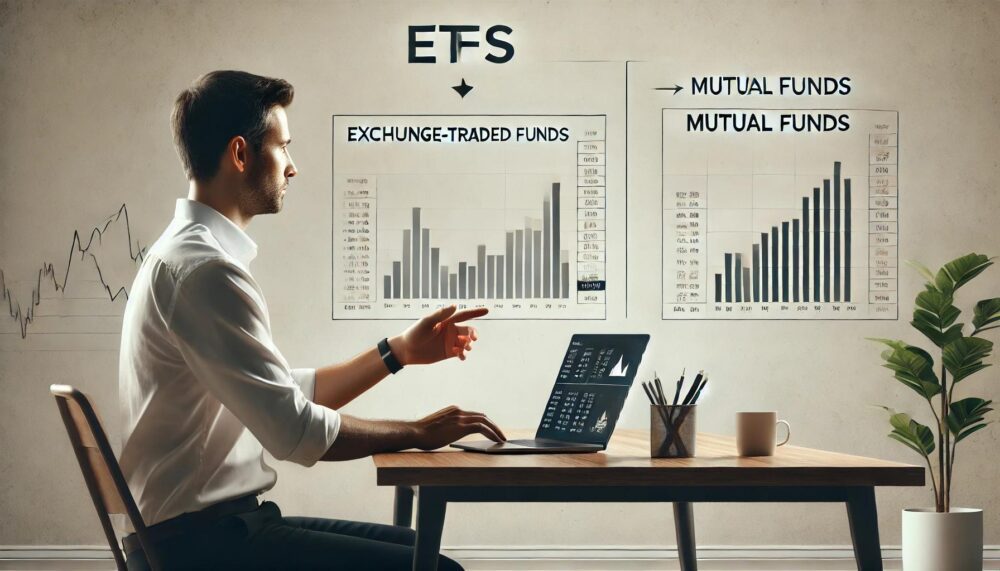
Exchange-Traded Funds (ETFs) have become increasingly popular investment vehicles in ...