

ITR in FY 2025-26: When will your ITR be picked for compulsory scrutiny? Check the Income Tax Department’s new guidelines
By Anulekha Ray
ITR Filing
Jul 3, 2025
Plan Your Retirement with Our Qualified Financial Advisors

Your first financial plan is free
Getting an income tax notice does not always mean something is wrong. Many notices are issued automatically after you file your return. Others ask for additional information or point out a mismatch between your return and the department’s records.
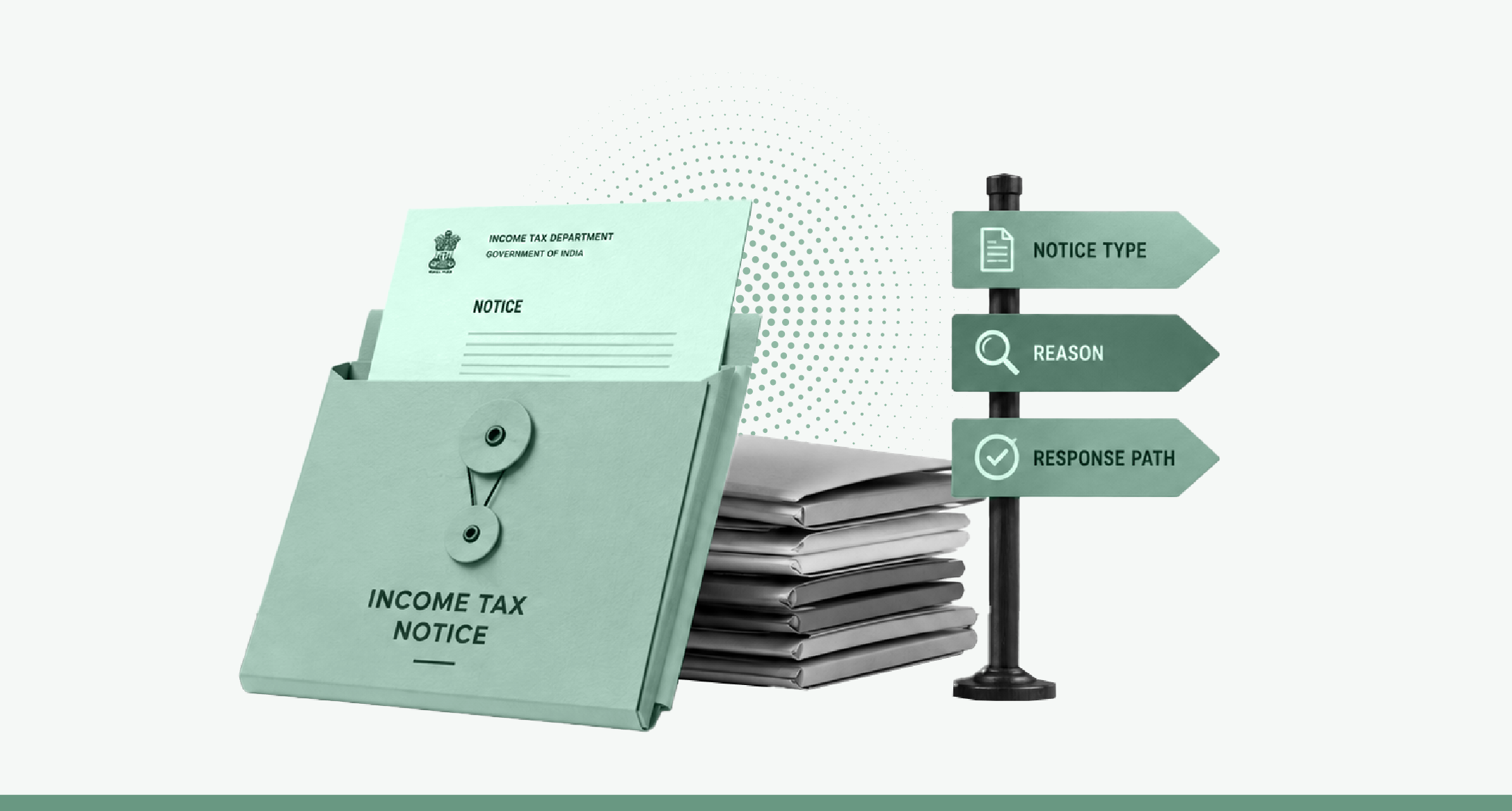
The first thing to check is the section quoted in the notice. It tells you why the notice was issued, what action is required, and the time available to respond.
This guide explains the most common income tax notices, what each one means, when you need to respond, and how to reply through the income tax portal.
Before you respond, confirm that the notice was issued by the Income Tax Department. Every valid notice carries a Document Identification Number (DIN).
Log in to the income tax portal, go to Pending Actions → e-Proceedings, and check that the notice appears against your PAN. You can also use the “Authenticate notice/order issued by ITD” service under Quick Links to verify the DIN.
If the notice does not carry a DIN or cannot be verified on the portal, do not act on it.
Once you have confirmed that it is genuine, note the section, the reason for the notice, the response deadline, and the action required.
A notice under Section 143(1) is an intimation sent after the Central Processing Centre (CPC) processes your return. It compares the return you filed with the department’s records.
You receive it when your return is processed. The intimation will show one of three outcomes: your return is accepted without changes, you are due a refund, or a tax demand arises because of an adjustment, such as a TDS mismatch or an arithmetic error.
If you disagree with an adjustment or demand, respond within 30 days. The CPC must issue the intimation within nine months from the end of the financial year in which the return was filed.
If the adjustment is correct, pay the demand. If you disagree, submit your response through the income tax portal. If the intimation contains an apparent mistake, file a rectification request under Section 154.
A notice under Section 139(9) means your return contains a defect that must be corrected.
Common reasons include using the wrong ITR form, leaving required schedules blank, reporting inconsistent income figures, or not attaching an audit report where required.
Correct the defect and submit the revised return within 15 days of receiving the notice, unless an extension is granted.
If you do not correct the defect within the permitted time, the return is treated as invalid.
A notice under Section 142(1) asks you to file a return or provide information required for assessment.
It may be issued if you have not filed a return despite being required to do so, or if the Assessing Officer requests documents such as books of account, deduction proofs, or other records.
Respond within the time stated in the notice, which is commonly 15 days.
Submit the requested return or documents through the e-Proceedings module on the income tax portal. Failure to respond can attract a penalty under Section 272A(1)(d) and may result in a best judgment assessment under Section 144.
A notice under Section 143(2) means your return has been selected for scrutiny.
The Assessing Officer examines the return and the supporting documents before completing the assessment.
The department must issue the notice within three months from the end of the financial year in which the return was filed. The response deadline is stated in the notice.
Collect the documents relevant to the issues raised and submit your response through the income tax portal.
A notice under Section 148 is issued when the Income Tax Department seeks to reassess an earlier assessment year because it believes taxable income has escaped assessment. It is generally preceded by a notice under Section 148A.
The notice may be issued if a return was not filed for a year in which tax was payable or if the department has information indicating that income was not reported.
The reassessment period is generally up to three years from the end of the relevant assessment year. It may extend to five years where the income alleged to have escaped assessment is ₹50 lakh or more. The response deadline is stated in the notice.
Read the reasons given in the notice, gather the relevant records, and submit your response through the income tax portal or through your authorised representative.
A notice under Section 245 states that your refund has been adjusted against an outstanding tax demand from an earlier year.
Why you get it: The department’s records show an unpaid demand from a previous year.
Deadline: 30 days.
How to respond: If the demand is correct, you can accept the adjustment. If it is incorrect or has already been paid, submit your disagreement with supporting documents on the income tax portal before the deadline.
A notice under Section 156 is issued after an assessment, reassessment, or rectification determines that tax, interest, penalty, or a fee is payable.
Why you get it: An order has determined that an amount is due.
Deadline: Pay or respond within 30 days of the notice.
How to respond: Pay the amount due. If you disagree, file an appeal or apply for a stay of demand.
| Notice | Purpose | Response time |
| 143(1) | Intimation after processing | 30 days (if there is a demand or adjustment) |
| 139(9) | Defective return | 15 days |
| 142(1) | Inquiry or call for return | As stated in the notice |
| 143(2) | Scrutiny assessment | As stated in the notice |
| 148 | Income escaping assessment | As stated in the notice |
| 245 | Refund adjusted against demand | 30 days |
| 156 | Notice of demand | 30 days |
Follow the deadline stated in your notice.
A notice under Section 139(9) can make your return invalid if the defect is not corrected.
A notice under Section 245 can result in your refund being adjusted against the outstanding demand.
Failure to respond to a notice under Section 142(1) or Section 143(2) can lead to a best judgment assessment under Section 144. Section 272A(1)(d) provides for a penalty of ₹10,000 for each failure to comply with a notice under Section 142(1) or Section 143(2).
If you do not pay a demand under Section 156, interest and recovery proceedings may follow.
Common triggers include:
For notices relating to FY 2025-26 (AY 2026-27) and earlier, the Income-tax Act, 1961 applies.
For Tax Year 2026-27 onward, the Income Tax Act, 2025 applies. Section numbers and terminology change under the new Act. If you receive a notice for a later year, refer to the section number stated in that notice.
Verify the DIN, identify the section, read the notice, and respond by the deadline. Keep copies of the documents you submit and save the acknowledgement after filing your response. For notices under Section 143(2), Section 148, or cases involving substantial tax demands, consider obtaining professional advice before responding.
What is an intimation under Section 143(1)?
It is a communication issued after your return is processed. It compares the information in your return with the department’s records and may confirm your return as filed, issue a refund, or raise a tax demand. If you disagree with an adjustment, respond through the portal. If the adjustment is due to an apparent error, you can seek rectification under Section 154.
What does a notice under Section 139(9) mean?
It means your return is defective. Common reasons include using the wrong ITR form or leaving required schedules incomplete. Correct the defect and file the revised return within the time stated in the notice. If you do not, the return is treated as invalid.
How do I check if an income tax notice is genuine?
Log in to the income tax portal, open Pending Actions → e-Proceedings, and check that the notice appears against your PAN. Every valid notice carries a Document Identification Number (DIN), which can be verified using the “Authenticate notice/order issued by ITD” service on the portal.
How do I respond to an income tax notice?
Log in to the income tax portal, open Pending Actions → e-Proceedings, read the notice, upload the documents requested or submit your response, and save the acknowledgement after filing.
What happens if I do not respond to an income tax notice?
The consequence depends on the section. A notice under Section 139(9) can make your return invalid. A notice under Section 245 can result in your refund being adjusted against an outstanding demand. Failure to respond to a notice under Section 142(1) or Section 143(2) can lead to a best judgment assessment under Section 144. An unpaid demand under Section 156 can attract interest and recovery proceedings.
When should I get professional help?
A notice under Section 143(2), Section 148, or one involving a substantial tax demand may require professional advice before you respond.
Published on 03 Aug 2026, 2:53 pm IST

The views in the article /blog are personal and that of the author. The idea is to create awareness and not intended to provide any product recommendations.


Plan Your Retirement with Our Qualified Financial Advisors
Your first financial plan is free