




 Book a free consultation
5 types of credit cards in India in 2025: Find out which one suits you...
Before saying yes to any credit card offer, know exactly what kind of card it is. Und...

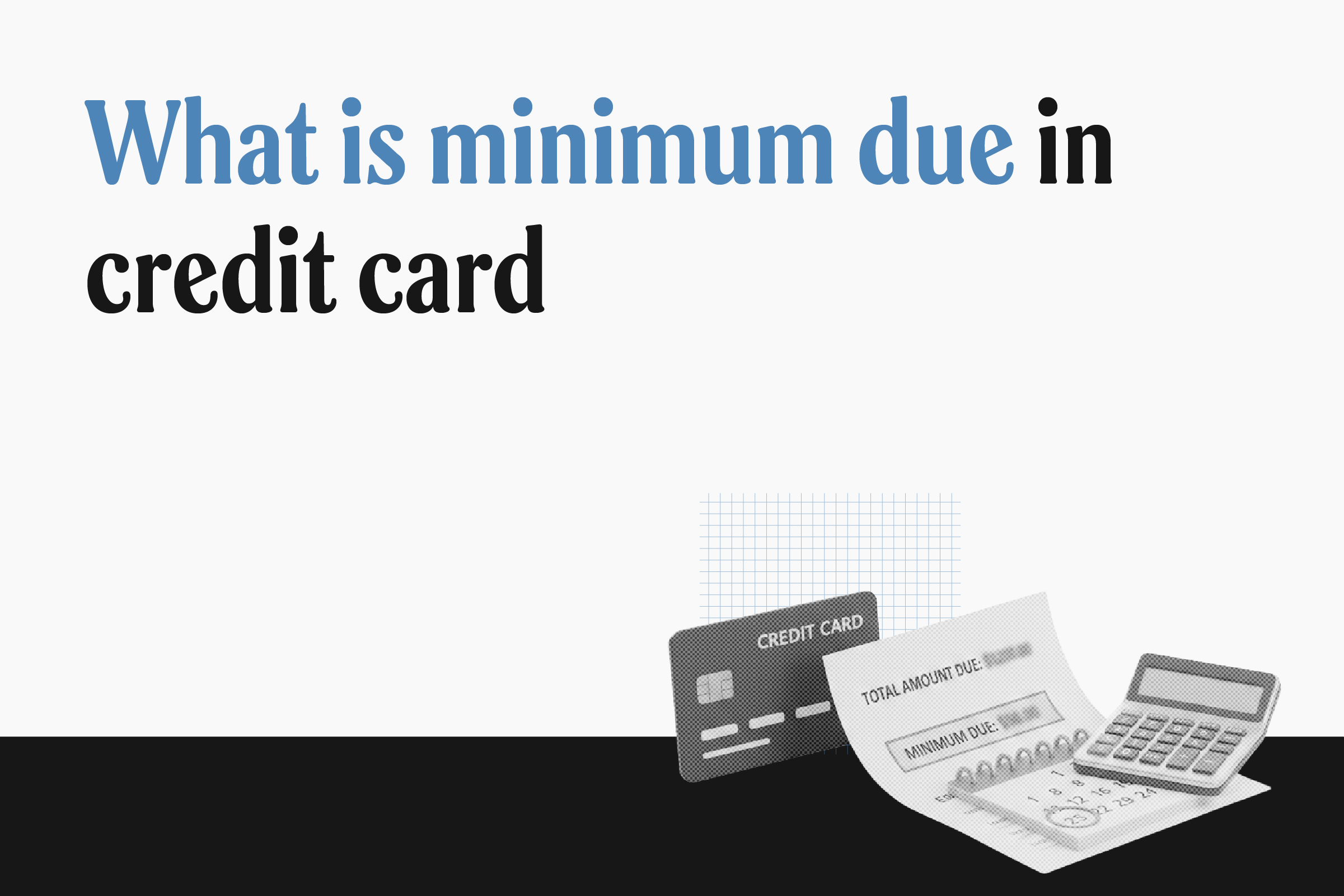
Have you ever noticed the term “minimum due” on your credit card bill when you are about to make the payment? You must have seen that the amount is smaller than the total due. You might feel tempted to pay the smaller amount and push your remaining dues to the next month.
But without fully understanding what minimum due really is and how it works, it can be dangerous for your income and expense planning to opt for it.
In this article, we will clearly explain what minimum due is, how it is calculated, what happens when you pay only the minimum amount, and how you can avoid falling into a debt trap.
Minimum due is the smallest amount you must pay by the due date to keep your credit card account active and avoid late payment charges. It is not your full bill amount. It is just a small portion of your total outstanding balance.
Though it differs slightly from bank to bank, generally:
Minimum Due = 5% of total outstanding + EMI amount + any fees or charges
or A fixed small amount (like ₹200 or ₹500), whichever is higher.
Important points:
Example:
Suppose your total credit card bill is ₹20,000.
Minimum due may be 5% of ₹20,000 = ₹1,000.
So, if you pay ₹1,000 before the due date:
But the remaining ₹19,000 is still unpaid.
Minimum due is designed to keep your account regular, not to help you clear your debt faster.
This is where many people get confused.
When you pay only the minimum due:
Let’s understand with an example.
Total bill: ₹20,000
Minimum due: ₹1,000
You pay ₹1,000
Remaining balance: ₹19,000
If your card charges 3% interest per month:
3% of ₹19,000 = ₹570 interest for one month.
Next month, interest will again be charged — and possibly on a higher amount if you make new purchases.
This is how small unpaid amounts slowly turn into big debt.
It may feel comfortable to pay a small amount, but in reality the bigger your unpaid amount, the more interest you pay, the longer you take to repay, the higher your total cost.
Credit card interest rates in India are usually around 30%–45% per year. That makes them one of the most expensive ways to borrow money.
Even if you keep paying the minimum due every month, it can take years to clear your balance, and you may end up paying much more than what you originally spent.
Paying minimum due can help in certain situations:
But it should only be a short-term solution, not a regular habit.
To stay financially safe, always try to pay the full statement amount before the due date whenever possible. Avoid using your credit card for expenses that you cannot repay in the next month. Make it a habit to track your spending regularly so that you know exactly where your money is going. Maintaining an emergency fund is also important, as it prevents you from depending on credit cards during urgent situations. If your balance is already high, reduce new spending and focus on clearing the outstanding amount step by step.
Credit cards are useful financial tools, but problems begin when we start treating the minimum due as a safe payment option every month.

Speak with a Qualified Financial Advisor today
Minimum due problems usually happen because of:
With proper financial planning, you maintain an emergency fund and track your monthly expenses carefully. You use credit cards only for convenience, not as a way to borrow money. Most importantly, you avoid carrying balances from one month to the next, which helps you stay free from unnecessary interest and financial stress.
A simple budget and repayment discipline can save you from paying thousands in unnecessary interest.
Speak to a Qualified Financial Advisor today and take control of your finances before small dues turn into big debt.

The views in the article /blog are personal and that of the author. The idea is to create awareness and not intended to provide any product recommendations.


Before saying yes to any credit card offer, know exactly what kind of card it is. Und...
Not getting a credit card? Try getting it against your fixed deposits!
In the world of personal finance, few things carry as much weight as your credit scor...