

NRI property transactions: Budget 2026 scraps mandatory TAN requirement for homebuyers
By Arman Qureshi
Real estate
Feb 1, 2026
Plan Your Retirement with Our Qualified Financial Advisors

Your first financial plan is free
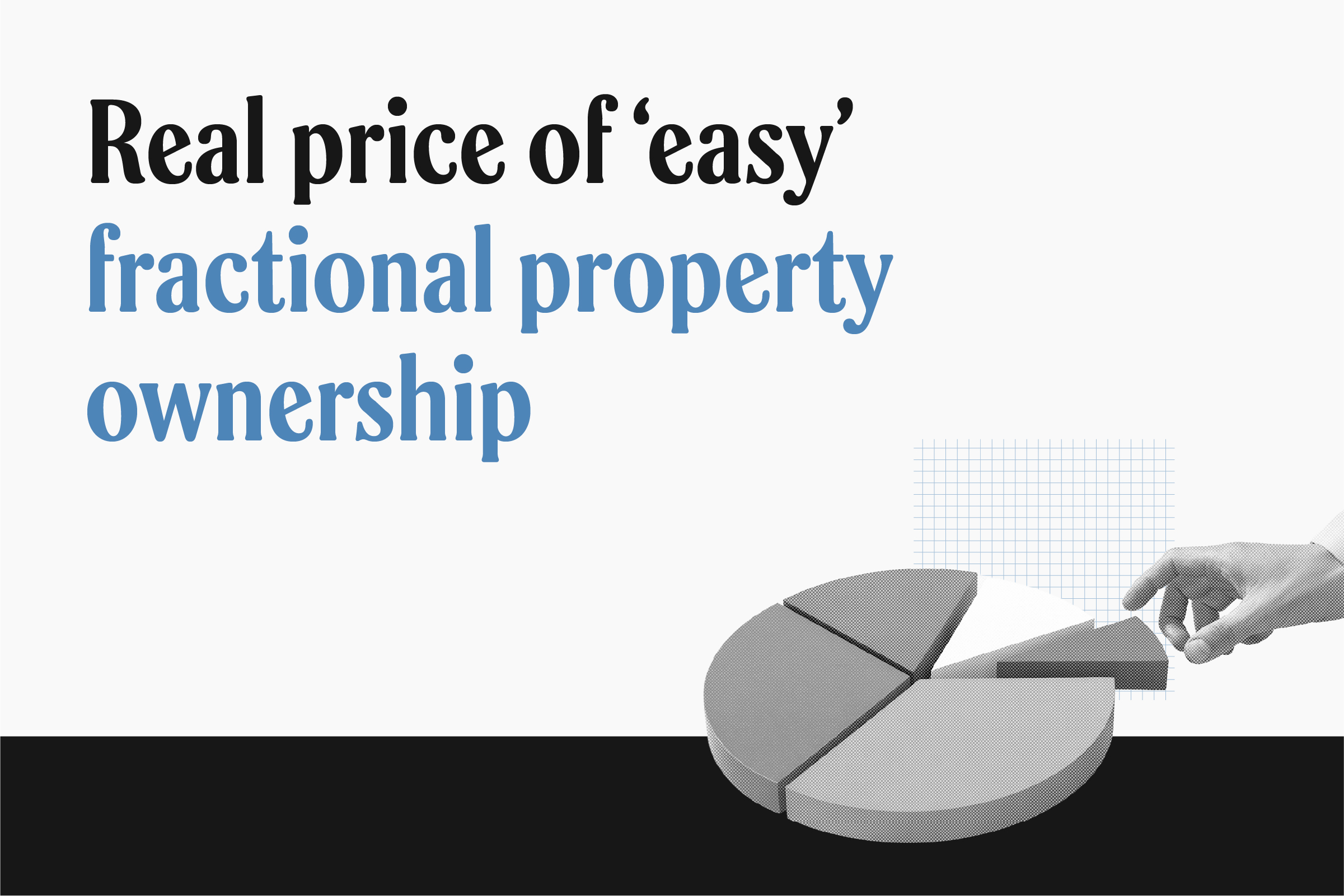
Calling yourself a property owner feels rewarding, even for a fractional share in a Mumbai tech park you have never visited, but bought through an online platform. Unregulated fractional property ownership sells exactly this thrill, bundled with promised rental yields of 9-11%. What it doesn’t advertise are the risks far deeper than you can ever anticipate.
Before diving into risks directly, one clarification is worth making. You may confuse fractional investing with REITs, and they are not the same thing. REITs and SM REITs are regulated by the Securities and Exchange Board of India (SEBI). They trade on exchanges, with mandatory disclosures and strict regulations. Fractional ownership, however, remains largely unregulated. This article targets the risks of fractional property ownership, not REITs.
But unregulated status is just one piece of the puzzle. To grasp the full stakes, you must understand what fractional investing actually is and how it works.
At its core, fractional property ownership allows multiple investors to pool money and collectively own a share of high-value real estate assets, which would otherwise be financially out of reach. Instead of one person deploying ₹200 crore to acquire one property, 200 people can invest ₹1 crore each and become partial owners of the same asset, earning through rental income and long-term capital appreciation.
The mechanics work through a Special Purpose Vehicle (SPV); a separate legal entity created solely to hold the asset on behalf of all investors. Once investor interest is received, the SPV is registered with the Registrar of Companies (RoC), under the Ministry of Corporate Affairs (MCA), funds are transferred into an escrow account held by the SPV. Investors are made members through private placement of equity shares.
The SPV is only as reliable as the platform managing it, and in India, that trust is being extended at a remarkable scale. The fractional ownership market in India is already expected to exceed ₹4.15 lakh crore in assets under management (AUM) by 2030, with asset classes expanding well beyond real estate. That is a significant amount of capital chasing an asset class that most investors do not fully understand yet. And where retail money moves at this scale, the risks are rarely far behind.
1. You do not actually own what you think you own
When you invest in unregulated fractional property investments, you are not purchasing a direct stake in that asset. Instead, you are buying securities issued by a Special Purpose Vehicle (SPV), which in turn holds the asset. Hence, there is no transfer of actual ownership of the asset to the investors.
This distinction matters enormously during disputes. If issues occur to the platform or the SPV, your legal rights are far weaker than those of a direct property owner. Without a proper regulatory framework, your only protection is the SPV’s shareholders’ agreement, a lengthy legal document that most investors never read in full or understand.
2. The SPV structure can bypass investor protection laws
Platforms create an SPV as a standalone company solely to acquire and hold one specific asset, like a commercial building. This setup isolates the property’s risks and liabilities, keeping them off the parent platform’s balance sheet. This looks like the company’s shielding your interests from the platform’s other debts. But, it creates a major vulnerability.
The parent company faces minimal financial consequences if the SPV goes bankrupt or faces lawsuits. You bear the full brunt alone, with no mechanism to hold the platform accountable, unlike regulated structures like SM REITs.
3. Liquidity is largely an illusion
Fractional real estate investing platforms often promise an exit option, but rarely explain what that actually means. Exiting depends entirely on the platform finding another buyer for your SPV securities. These securities trade in private arranged by the platform, not on public exchanges. Unlike mutual funds (daily redemptions) or listed stocks (instant trades), your capital can remain locked for years beyond any promised horizon. If no buyers emerge, due to economic downturns, asset devaluation, or platform reluctance, you are stuck, with no court-ordered exit or regulator to intervene on your behalf.
4. Valuations are opaque and unverifiable
When a platform tells you a space is worth ₹50 crore, how is that number arrived at? In fractional ownership, there is no mandatory independent valuation and no standardised methodology to arrive at that number. SEBI has repeatedly flagged the lack of uniformity in valuation, management fees, and maintenance cost disclosures as core concerns across these platforms. This also brings a related significant risk.
5. Fraud and mis-selling risks are closer than you think
No regulatory body audits platform claims. They can project 12% assured returns, hype unstable tenants, or base exit assumptions on optimistic scenarios that rarely materialise. By the time these discrepancies emerge, your money is already locked inside an SPV with limited legal recourse.
6. The platform itself is a risk
Your returns depend entirely on the platform continuing to operate. If it shuts down or becomes insolvent, the management of your investment disappears with it. Most fractional real estate investing platforms in India are early-stage startups with limited track records and no mandatory net worth requirements.
7. Expanding asset classes, expanding risks
Fractional property ownership in India has moved well beyond commercial real estate into fine art, vintage cars, luxury collectibles, farmland, etc. Agricultural land falls entirely outside the SM REIT framework, meaning farmland fractional deals carry no standardised investor protection. The art and collectibles segment is similarly uncharted. Valuations are deeply subjective, and virtually no secondary market exists in India. A fractional stake in a painting offers no rental yield, no predictable returns, and no easy exit for you.
Small and Medium Real Estate Investment Trusts (SM REITs), mentioned quite a few times, were launched by SEBI in March 2024. They regulate these unregulated fractional investing platforms under SEBI oversight, adding investor protection frameworks, clear valuations, and fees. Now, existing platforms are migrating to this structure, with units starting at ₹10 lakh for high-net-worth investors seeking commercial property yields.
A Qualified Financial Advisor’s role is not to fit fractional ownership into your portfolio, but to identify when they don’t belong there. The value lies in testing the investment against your financial reality, not in endorsing its appeal. This involves assessing how much illiquidity your plan can absorb, whether the risk aligns with your existing commitments, and how the investment interacts with your goals, timelines, and tax position.
Most importantly, the financial advisor ensures that real estate investment remains a component of a structured plan rather than an unexamined bet. In doing so, they help investors avoid the common trap of mistaking affordability for safety, which can happen in the case of fractional property ownership.

The views in the article /blog are personal and that of the author. The idea is to create awareness and not intended to provide any product recommendations.


Plan Your Retirement with Our Qualified Financial Advisors
Your first financial plan is free