
 Book a free consultation
TDS credit mismatch explained: How to spot and claim it in ITR
By Tejashree Satpute
ITR Filing
Jul 2, 2026
Plan Your Retirement with Our Qualified Financial Advisors

Your first financial plan is free
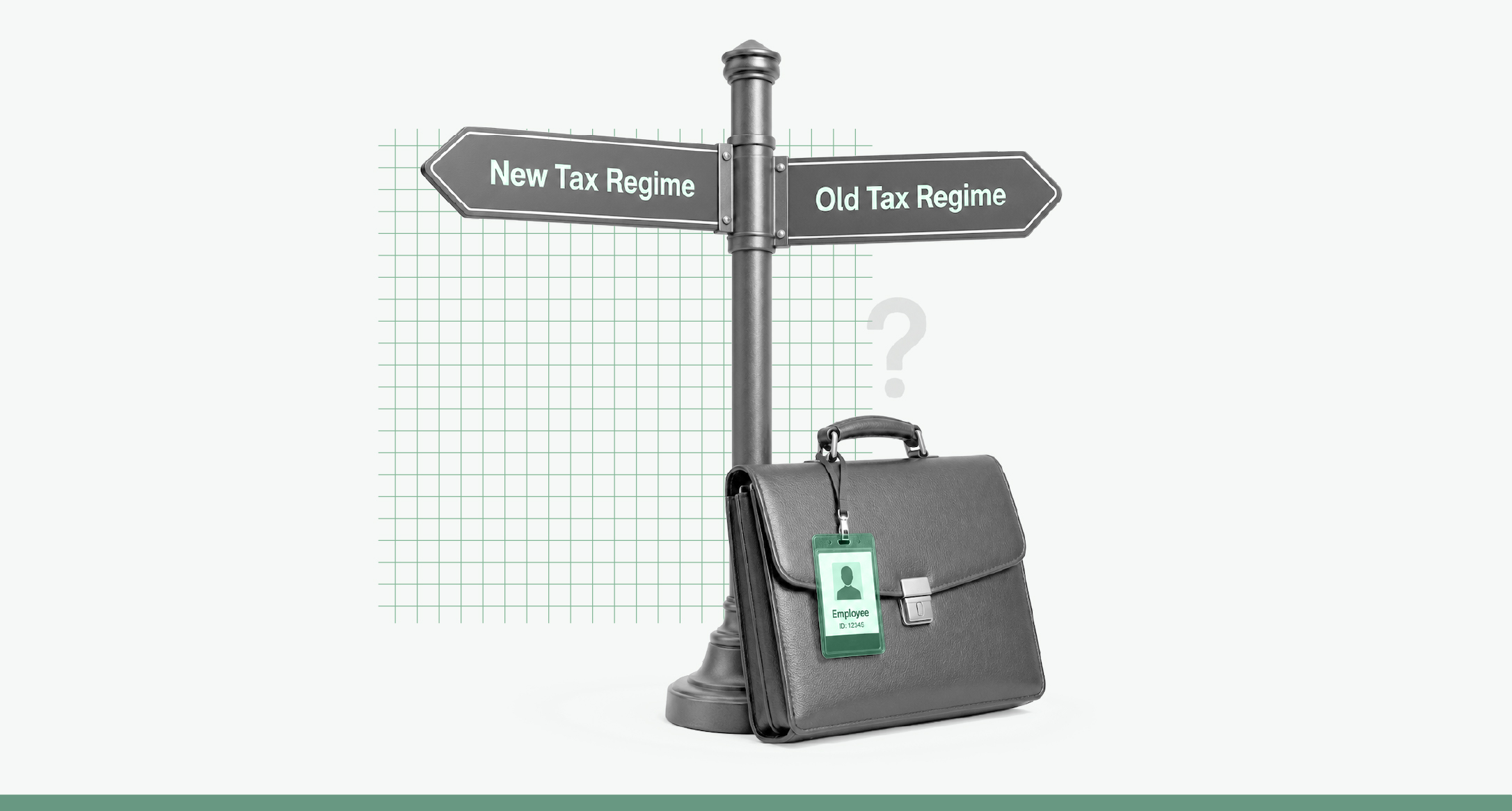
For most salaried employees, the new tax regime is now the better choice, but not for everyone. The honest answer depends on how many deductions you claim. If you have few deductions, the new regime’s lower rates and the tax-free band up to ₹12.75 lakh usually win. If you have a home loan, pay rent with HRA, and invest the full ₹1.5 lakh under 80C, the old regime can still save you more. This guide explains where the new regime works for salaried people, where it doesn’t, and how to decide.
For the full numbers, see our old vs new tax regime guide and our new tax regime slabs guide.
Key takeaways
The new regime has three features that make it attractive for salaried people.
First, income up to ₹12.75 lakh is tax-free. The Section 87A rebate makes taxable income up to ₹12 lakh tax-free, and the ₹75,000 standard deduction lifts the tax-free salary to ₹12.75 lakh. A large share of salaried employees fall within this band and pay no tax at all.
Second, the rates are lower across the slabs, so even above ₹12.75 lakh the tax is often smaller than under the old regime, unless you have heavy deductions.
Third, it is simple. You do not need to collect investment proofs, rent receipts, or insurance certificates, and you do not have to lock money into specific products to save tax.
The new regime is usually the better choice if you:
The old regime can save you more if you have several large deductions at once. This usually means a salaried person who:
Add these together and your total deductions can cross the level where the old regime beats the new one.
Pay ₹2,499 upfront and get 100% cashback.
Filing will be done by Planmytax.ai, powered by 1 Finance

We will get back to you shortly.
The simplest way to decide is to compare your total deductions against the break-even, the deduction level at which the old regime starts winning.
| Gross salary | Old regime wins if your deductions exceed |
| Up to ₹12.75 lakh | New regime gives zero tax, it wins by default |
| ₹15 lakh | About ₹5.9 lakh |
| ₹20 lakh | About ₹7.6 lakh |
| ₹25 lakh | About ₹8.5 lakh |
Most salaried employees claim ₹2 to ₹4 lakh in total deductions, which keeps the new regime ahead. The old regime tends to win only for those with a home loan plus high HRA plus full 80C and more.
As a salaried employee, the new regime removes these common benefits:
You still get:
Start with the numbers. Add up the deductions you genuinely claim, including the standard deduction, and compare your tax under both regimes for your income. If your deductions are below the break-even, choose the new regime; if above, the old regime. The portal’s calculator does this in a minute.
Then look past the tax. The new regime’s simplicity is a real benefit, but it removes the old regime’s quiet push to save and insure through 80C and 80D. If you move to the new regime, keep your term insurance and health cover anyway, because you need them for protection, not for the deduction. Keep investing for your goals through whatever instrument fits, even without the tax break. The money you no longer lock into 80C is not a bonus to spend — it is money you now have to direct yourself.
The new regime is the default, and as a salaried employee you can switch each year while filing, so you can reassess every season as your income and deductions change. Choose the regime that lowers your tax this year, and make sure your savings plan does not depend on the tax system to keep itself going.
Pay ₹2,499 upfront and get 100% cashback.
Filing will be done by Planmytax.ai, powered by 1 Finance
We will get back to you shortly.
Is the new tax regime good for salaried employees?
For most, yes. A salary up to ₹12.75 lakh is tax-free under the new regime, and the lower rates suit those with few deductions. The old regime still wins for salaried people with large deductions such as a home loan, high HRA, and full 80C investments.
Is the new regime better if I have a home loan?
Often the old regime is better in that case, because the home loan interest deduction of up to ₹2 lakh, combined with HRA and 80C, can push your deductions past the break-even. Compare both before deciding.
How much salary is tax-free under the new regime?
Up to ₹12.75 lakh, because of the ₹60,000 rebate on income up to ₹12 lakh and the ₹75,000 standard deduction. Above that, tax applies at the new regime’s slab rates.
Which deductions can a salaried employee claim in the new regime?
The ₹75,000 standard deduction and the employer’s NPS contribution under Section 80CCD(2). Most others, including 80C, 80D, and HRA, are not available.
Can a salaried employee switch back to the old regime?
Yes. Salaried employees without business income can choose their regime each year while filing the return, so you can move between the two as your situation changes.
This guide is for general informational purposes and is accurate to the best of our knowledge as of June 2026. The tax figures are illustrative and assume the stated income and deduction levels; your actual tax depends on your full income, deductions, and other factors. Tax laws can change, and individual circumstances vary. Please verify current details on incometax.gov.in and consult a qualified Chartered Accountant or tax advisor before acting on any information here.

The views in the article /blog are personal and that of the author. The idea is to create awareness and not intended to provide any product recommendations.


Plan Your Retirement with Our Qualified Financial Advisors
Your first financial plan is free