

ITR-2 form AY 2026-27: Eligibility, who should file, new changes, due date & online filing guide
By Arman Qureshi
ITR Filing
Jun 18, 2026

Plan Your Retirement with Our Qualified Financial Advisors

Your first financial plan is free
If you bought, sold, exchanged, or spent crypto during FY 2025-26, you may have to report those transactions separately in your income tax return.
Crypto transactions are reported differently from most other assets. The return form you file, the schedule you complete, and the information you report depend on how your income is classified under the Income Tax Act.
If you have taxable crypto transactions, ITR-1 and ITR-4 are generally not available.
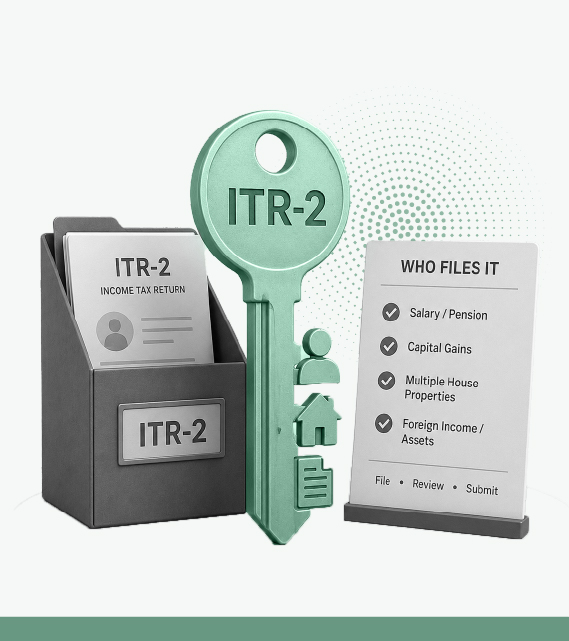
You will usually file ITR-2 if your crypto transactions are reported as capital gains, or ITR-3 if they are reported as business income. The classification depends on the facts of your case, including the nature of your activity, the frequency of transactions, and whether you are carrying on a business.
Use the ITR form that matches your tax treatment.
Income from virtual digital assets is reported in Schedule VDA.
Keep a record of each taxable transaction, including the date of acquisition, the date of transfer, the cost of acquisition, and the consideration received. Use these records to complete the schedule in your return.
Prepare a complete list of your crypto transactions before you start your return.
Taxable events can include selling crypto, exchanging one virtual digital asset for another, or using crypto to purchase goods or services, subject to the provisions of the Income Tax Act. Use your exchange statements, wallet records, and transaction history to identify the transactions you need to report.
Taxable transactions include:
Non taxable transactions on the other hand include:

Airdrops, staking rewards, and certain crypto gifts are reported differently from sales and should be disclosed separately in your return.
Airdrops and staking rewards are generally taxable as income at their fair market value on the date you receive them. That value becomes the cost of acquisition when you later sell the tokens.
Crypto gifts exceeding ₹50,000 in a financial year may be taxable in the recipient’s hands, unless they are received from specified relatives or on specified occasions under the Income Tax Act.
Virtual digital assets are taxed under a separate tax regime. When calculating your tax liability, keep the following rules in mind:
Tax may be deducted at source (TDS) at 1% on certain transfers of virtual digital assets under Section 194S. This is tax collected in advance and can be claimed as a credit while filing your ITR.
Before filing, verify that the TDS is reflected in your Form 26AS or Annual Information Statement (AIS). Claim only the TDS that appears in your tax records.
If you are a resident in India, your global income may be taxable under the Income Tax Act. Virtual digital assets held through foreign exchanges or overseas wallets may also need to be reported, depending on your circumstances.
Review the applicable reporting requirements before filing your return.
Crypto exchanges report transaction details to the Income Tax Department. Before you file your return, reconcile your exchange statements with your Form 26AS, Annual Information Statement (AIS), and the information reported in Schedule VDA.
Common issues that may result in further verification include:
If your return includes virtual digital assets, consider getting professional assistance, especially if you have multiple exchanges, frequent trades, overseas holdings, or a mix of investment and trading activity.
With expert-assisted filing through planmytax.ai, qualified tax professionals can help you:
File your ITR with 1 Finance via planmytax.ai today.
Disclaimer: This is not financial advice. Only a SEBI-registered advisor can provide financial advice. For investment planning, consult a Qualified Financial Advisor.
Published on 24 Jul 2026, 11:56 am IST

The views in the article /blog are personal and that of the author. The idea is to create awareness and not intended to provide any product recommendations.


Plan Your Retirement with Our Qualified Financial Advisors
Your first financial plan is free